
Please Choose Your Language
Views: 273 Author: Xinxinke Extrusion Publish Time: 2026-11-14 Origin: Site


Content Menu
● Why Source an Extrusion Press from Italy?
>> A Connected Northern Italian Engineering Base
>> What Recent Industry Evidence Means for Buyers
● Selection Criteria: How to Evaluate a Qualified Supplier
● Supplier Comparison: Capacity, MOQ, and Certification
● Seven Extrusion Press Manufacturers and Suppliers to Evaluate
>> 1. Xinxinke Co., Ltd. — A Customization-Focused International Alternative
>> 2. Foshan Yejing Machinery Manufacturing Co., Ltd. — Aluminum Presses and Complete-Line Automation
>> 3. Foshan Sailixin Machinery Manufacturing Co., Ltd. — A Broad Advertised Press Range
>> 4. Presezzi Extrusion S.p.A. — Tailored Italian Extrusion Engineering
>> 5. Danieli Breda — Complex Extrusion and Forging Projects
>> 6. OMAV S.p.A. — Complete-Line Integration within SMS Group
>> 7. Cometal Engineering S.p.A. — Extrusion, Casthouse, and Packing-Line Coordination
● Technical Buyer's Guide: Specify the Process Before the Press
>> Match Press Force to the Actual Product Mix
>> Define Material Grades and Inspection Requirements
>> Treat Compliance as a Project Deliverable
● Common Procurement Pitfalls—and How to Avoid Them
>> An Under-Discussed Trap: The Acceptance Denominator
● Factory Verification, Trial Production, and Logistics
>> Verify the Actual Manufacturing Site
>> Replace "Samples" with a Representative Production Trial
>> Plan Logistics Before Design Freeze
● Conclusion: Choose a Verified Process Partner
● FAQ: Difficult Questions Buyers Should Ask
>> 1. How can I check whether a supplier's ISO certificate is expired or inappropriate?
>> 2. Can one extrusion press process both aluminum and copper efficiently?
>> 3. How should a buyer handle a 2026 order delivered in 2027?
>> 4. How do we compare energy consumption between two quotations fairly?
>> 5. Who should guarantee output when several companies supply the line?
● Industry and Regulatory Resources
Italy offers a strong starting point for buyers sourcing an extrusion press, particularly when the project requires integrated automation, complex alloy processing, or a complete production line. Manufacturers such as Presezzi Extrusion, Danieli Breda, OMAV, and Cometal Engineering cover different combinations of press engineering, thermal processing, material handling, and plant integration. Their capabilities make Italy relevant to both new extrusion plants and modernization projects.
However, choosing a long-term machinery partner requires more than comparing brand names or nominal press tonnage. Buyers should examine factory credentials, engineering resources, material traceability, quality-control procedures, delivery commitments, and the supplier's ability to support equipment after commissioning.
This guide compares seven suppliers for buyers evaluating Italian extrusion equipment alongside international alternatives. Xinxinke Co., Ltd., Foshan Yejing Machinery Manufacturing Co., Ltd., and Foshan Sailixin Machinery Manufacturing Co., Ltd. appear first as China-based comparison options—not as Italian manufacturers. The sequence is editorial, not a verified ranking by market share, price, or product quality.

Italy's extrusion equipment supply chain benefits from a concentration of machinery engineering businesses in the north of the country. Cometal Engineering is headquartered in Montichiari, Brescia, while OMAV forms part of SMS group's Italian manufacturing network. Danieli operates from Buttrio in northeastern Italy. These businesses connect press manufacturing with broader capabilities in metal processing and integrated plant engineering.
The practical advantage is access to suppliers that can address more than the hydraulic press itself. Depending on the manufacturer, the project scope can include billet heating, extrusion, quenching, handling, sawing, aging, and automated storage. This matters because the output of an extrusion plant depends on how well these systems work together—not simply on the force available at the main cylinder.
European Aluminium's *Environmental Profile Report 2024*, issued in 2025, reports a 27% reduction in total energy consumption for extrusion processes compared with 2015. The extrusion dataset uses 2021 industry figures; it should not be described as a measurement of 2025 or 2026 press performance.
The procurement implication is nevertheless important: environmental performance is becoming measurable at the process level. Buyers should request defined energy-consumption boundaries and production conditions rather than accepting an unsupported "energy-saving" percentage.
A press-only electricity figure, for example, cannot be compared directly with a figure that includes billet heating, quenching, handling, and aging.
The companies below were selected for documented involvement in extrusion presses or integrated extrusion systems, identifiable manufacturing backgrounds, and relevance to industrial procurement. Public information is uneven, so unavailable figures are identified rather than estimated.
Before approving any supplier, assess six areas.
| Evaluation area | Evidence to request | Why it matters |
|---|---|---|
| Manufacturing identity | Business registration, factory address, ownership details, workshop inspection | Distinguishes the actual manufacturer from an intermediary |
| Engineering capability | Press calculations, application references, layout drawings, automation architecture | Shows whether the supplier can engineer the required process |
| Quality control | Inspection and test plan, material certificates, machining reports, pressure-test records | Makes critical-component quality traceable |
| Delivery reliability | Milestone schedule, purchased-component status, reference-project delivery records | Tests whether the promised lead time is realistic |
| Compliance | Applicable declaration of conformity, risk assessment, safety validation, current management-system certificates | Separates documented compliance from website badges |
| Lifecycle support | Commissioning scope, spare-parts list, response commitments, software-access policy | Reduces dependence on undocumented after-sales promises |
For capital equipment, OEM and ODM terminology also needs clarification. In this guide, OEM customization means adapting the machine configuration to the buyer's specification. ODM-style support means supplier-led engineering of a tailored solution. Neither term automatically implies private labeling, design ownership, or unrestricted access to control software.
"Capacity" can mean press force, factory manufacturing output, or finished-profile production. These are different measurements. A supplier's annual machine production does not establish the tonnes per hour achievable on a customer's extrusion line.
| Supplier | Manufacturing base and founding information | Publicly documented capacity or scope | MOQ and purchasing basis | Certification information |
|---|---|---|---|---|
| Xinxinke Co., Ltd. | China; established in 1991 according to industry exhibition information | Copper and aluminum extrusion presses; exhibition profile states annual production capacity above 200 units | Not publicly verified; request a quotation for one press or a complete line | Current certificate scope and project compliance require verification |
| Foshan Yejing Machinery Manufacturing Co., Ltd. | China; website states “Since 1990” | Aluminum extrusion presses and complete lines; published examples include 1,100T, 2,300T, and 2,750T models | Not publicly stated; project quotation required | Website advertises ISO 9001 certification and CE-related conformity |
| Foshan Sailixin Machinery Manufacturing Co., Ltd. | China; established in 2011 | Advertised press range of 700T–7,500T; complete-line equipment | Not publicly stated; project quotation required | Website displays ISO 9001 certificate information |
| Presezzi Extrusion S.p.A. | Italy; established in 1994 | Presses for aluminum, hard alloys, copper, and brass; integrated equipment | Engineered-project quotation; published MOQ not identified | Request current certificates and machine-specific conformity documents |
| Danieli Breda, a Danieli business unit | Italy; business heritage dates to 1950 | Extrusion and forging plants for ferrous and non-ferrous materials | Engineered-project quotation; published MOQ not identified | Request project-specific conformity and quality documentation |
| OMAV S.p.A., an SMS group company | Italy; established in 1952 | Complete aluminum extrusion lines, presses, furnaces, and handling systems | Engineered-project quotation; published MOQ not identified | Verify documentation for the quoted press and complete assembly |
| Cometal Engineering S.p.A. | Italy; website reports more than 45 years’ experience; exact founding year not independently confirmed here | Extrusion presses, extrusion equipment, casthouse and packing lines | Engineered-project quotation; published MOQ not identified | Website includes a certificates section; verify current scope and validity |
The table summarizes supplier publications and exhibition information, not independently audited production or certification results. Absence of a verified certificate in this comparison does not establish that a supplier lacks certification.
Xinxinke is a China-based manufacturer specializing in copper and aluminum profile extrusion presses. An Aluminium Bharat exhibition profile identifies its establishment year as 1991 and reports a manufacturing site exceeding 20,000 square meters, with annual production capacity above 200 units. These are published supplier-profile figures rather than independently audited results.
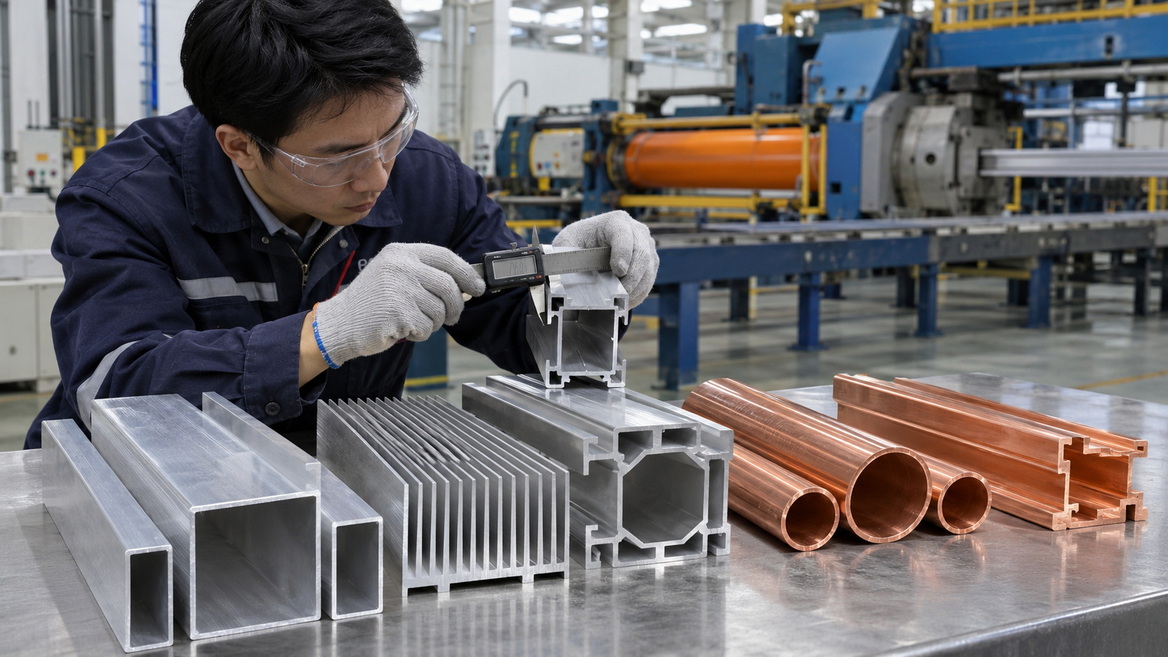
Its documented investment in large machining equipment—including an 8 × 5.5-meter vertical lathe, a floor-type boring mill, and a 200-ton crane—provides useful subjects for a factory audit. Buyers should connect these facilities to the actual components and machining operations included in their proposed machine.
For small and medium-sized extrusion businesses, Xinxinke is worth including in a cost-conscious tender where configuration flexibility and direct technical communication are priorities. Its company-provided positioning emphasizes customized solutions and a professional technical team. However, comparative pricing, communication speed, and application performance should be established through the quotation process rather than assumed.
- Core focus: Copper and aluminum extrusion machinery.
- Founding year: 1991, according to published exhibition information.
- Market relevance: International buyers evaluating Chinese manufacturing alternatives; a verified country-by-country sales breakdown is unavailable.
- OEM/ODM discussion scope: Press configuration, production-layout interfaces, automation requirements, and application-specific engineering, subject to written confirmation.
- Main verification point: Obtain the exact legal contracting name, current certificates, comparable operating references, and a signed technical specification.
An effective initial inquiry should include alloy grades, billet dimensions, representative profile drawings, required output, plant utilities, and the intended destination market.
Foshan Yejing Machinery Manufacturing Co., Ltd., operating through yjing-extrusion.com, states that its machinery business dates to 1990. It specializes in aluminum extrusion presses and complete production solutions for domestic and overseas customers. Its website also promotes short-stroke presses and intelligent production lines.
Published 2026 product examples include 1,100T, 2,300T, and 2,750T presses associated with different billet diameters. These examples help buyers identify relevant configurations, but they should not be interpreted as the manufacturer's complete available range.
- Core strength: Aluminum press engineering combined with production-line integration.
- Founding year: 1990, as stated on its website.
- Main markets: Domestic China and overseas customers; regional sales proportions are not disclosed.
- OEM/ODM discussion scope: Press selection, billet-handling configuration, automation, and complete-line interfaces.
- Main verification point: Match every proposed press model to the intended alloy, profile envelope, billet size, and operating cycle.
Yejing advertises ISO 9001 and CE-related credentials. Buyers should still obtain current documents and confirm that they cover the correct manufacturing entity and equipment scope.
Foshan Sailixin Machinery Manufacturing Co., Ltd., operating through slxextrusionpress.com, states that it was established in 2011. Its published aluminum extrusion press range extends from 700T to 7,500T. The company also lists billet furnaces, die ovens, quenching systems, cooling tables, pullers, stretchers, and aging equipment.
Sailixin reports nearly 30 research and development technicians and cumulative domestic and overseas sales exceeding 1,400 sets. These are company-reported figures and should be supported by application references relevant to the buyer's project.
- Core strength: Press supply combined with upstream and downstream equipment.
- Founding year: 2011.
- Main markets: Domestic and overseas customers; detailed regional distribution is not published.
- OEM/ODM discussion scope: Factory planning, press configuration, line-equipment selection, and technical integration.
- Main verification point: Evaluate an operating installation handling comparable alloys, billet sizes, and profile complexity.
Its website displays ISO 9001 certificate information. Request the certificate number, issuer, scope, and validity status before approving the supplier.
Presezzi Extrusion S.p.A. was established in 1994. Its published scope includes presses for aluminum, hard alloys, copper, and brass, alongside melting technology and profile automation. The company explicitly describes project-specific machine development and dedicated research and development investment.
This makes Presezzi particularly relevant when the procurement brief involves more than a standard architectural-profile line. Buyers considering demanding alloys, integrated internal logistics, or wider plant development can assess several process stages within one supplier group.
- Core strength: Customized press engineering and broad extrusion-process integration.
- Founding year: 1994.
- Main markets: International customers; the company describes worldwide technical support.
- OEM/ODM discussion scope: Bespoke press design, line integration, handling automation, and related process equipment.
- Main verification point: Separate the performance commitments of the press, thermal equipment, and handling system.
Presezzi's sustainability reporting is useful background, but corporate environmental disclosures should not replace a project-specific energy guarantee.
Danieli Breda is a Danieli business unit with a heritage dating to 1950. It supplies extrusion and forging machinery and complete plants for processing both ferrous and non-ferrous materials.
Its relevance lies in technically demanding industrial projects where the buyer needs application engineering and broader metallurgical plant experience. Procurement teams should distinguish the precise Danieli Breda package from other Danieli group equipment and identify which entity carries each contractual obligation.
- Core strength: Integrated extrusion and forging plant engineering.
- Founding reference: Business heritage since 1950.
- Main markets: Global industrial customers processing ferrous and non-ferrous materials.
- OEM/ODM discussion scope: Application-specific press and plant engineering rather than conventional private-label manufacturing.
- Main verification point: Request references using comparable materials and operating conditions.
For a complex project, acceptance criteria should include the intended product and process outcome—not simply successful operation of the hydraulic equipment. Danieli's published scope spans several material families, making application-specific qualification essential.
OMAV S.p.A. was established in 1952 and became a wholly owned SMS group subsidiary in September 2020. Its published portfolio includes extrusion presses, aluminum furnaces, complete casthouse plants, and extrusion handling systems.
OMAV is therefore relevant to buyers who want to reduce coordination gaps between press operation and downstream material movement. Its website includes international project references, including a runout-table and handling-system project for a 27 MN extrusion line.
- Core strength: Complete aluminum extrusion lines and handling integration.
- Founding year: 1952.
- Main markets: International aluminum extrusion producers.
- OEM/ODM discussion scope: Project-specific line engineering, thermal equipment, handling systems, and integration.
- Main verification point: Confirm the precise division of engineering, manufacturing, commissioning, and warranty responsibility between OMAV and other group entities.
SMS group publishes a broader aluminum extrusion press range of 10–160 MN. That is a group-level capability, not automatic confirmation that every configuration falls within a particular OMAV quotation.
Cometal Engineering S.p.A. is headquartered in Montichiari, Brescia. Its website describes more than 45 years of experience and lists extrusion presses, extrusion equipment, foundries, and special products. An exact incorporation year was not confirmed in the reviewed material.
The group lists operations in Italy, North America, Hong Kong, and Foshan. These locations provide evidence of an international business footprint, although they do not establish regional sales shares or guarantee local service availability for every project.
- Core strength: Coordination across extrusion, casthouse, and packing equipment.
- Founding information: More than 45 years' experience stated; exact year requires confirmation.
- Main markets: International, supported by its published operating locations.
- OEM/ODM discussion scope: Customized equipment packages, automation, and production-line integration.
- Main verification point: Identify who owns the complete production sequence and resolves interface problems during commissioning.
Cometal states that its components are European-made. Buyers should translate that claim into an approved component list with manufacturers, models, and substitution rules.
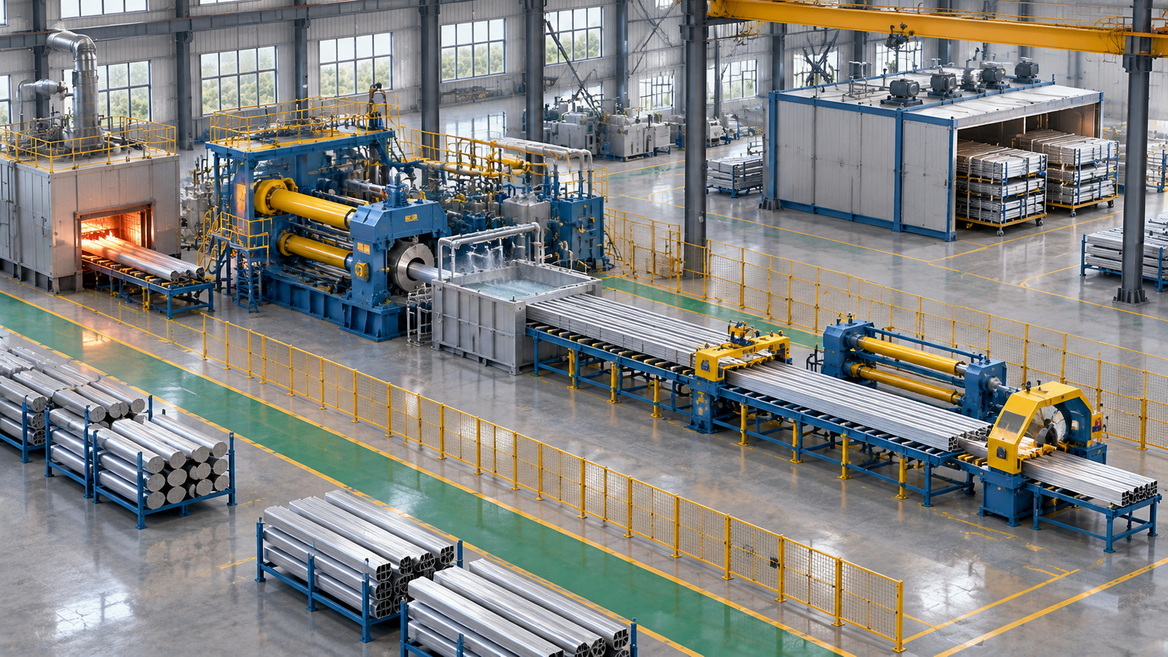
Nominal tonnage is only one selection parameter. A useful technical inquiry should define:
- Alloy families, such as 6060, 6063, 6061, or more demanding hard alloys.
- Billet diameter, length, and temperature range.
- Solid, hollow, or semi-hollow profile requirements.
- Circumscribing circle, wall thickness, and dimensional tolerances.
- Required extrusion speed and acceptable surface condition.
- Annual saleable output and planned operating hours.
- Quenching, stretching, aging, and inspection requirements.
Supplier portfolios differ by material and process scope, as demonstrated by Presezzi's published aluminum, hard-alloy, copper, and brass capabilities and Danieli Breda's ferrous and non-ferrous applications. A broadly advertised material range should therefore lead to more specific application questions, not fewer.
To reduce the risk of component substitution or inadequate material quality, place critical items in a contractual inspection and test plan:
1. Identify pressure-bearing and load-bearing components.
2. Specify the approved material grades and heat-treatment requirements.
3. Require traceability from material certificates to finished components.
4. Agree on applicable ultrasonic or other nondestructive inspections.
5. Record critical dimensions, alignment checks, and hydraulic test results.
6. Require written approval before substituting critical components.
This documentation-focused approach follows the same principle as supplier qualification: claims become useful only when they are tied to identifiable equipment and verifiable records.
For machinery placed on the EU market before 20 January 2027, the European Commission identifies Machinery Directive 2006/42/EC as the applicable machinery framework. Machinery Regulation (EU) 2023/1230 becomes mandatory from that date. A purchase signed in 2026 may therefore require careful transition planning if market placement occurs in 2027.
The contract should identify:
- The responsible manufacturer or system integrator.
- Applicable legislation and standards.
- Required declarations and instructions.
- Safety-function validation responsibilities.
- The compliance boundary of the complete assembled line.
Do not treat a generic "CE certificate" image as sufficient evidence. Likewise, request an applicability assessment for claims involving RoHS or environmental requirements rather than assuming that one badge establishes compliance for every industrial installation.
| Procurement risk | Why it causes problems | Practical control |
|---|---|---|
| Comparing press force alone | Similar nominal force does not establish comparable output | Use the same product mix and acceptance conditions |
| Undocumented component substitutions | Quoted quality may differ from delivered equipment | Attach an approved bill of materials and substitution procedure |
| Ambiguous line boundaries | Press, furnace, and handling suppliers may dispute responsibility | Assign interface ownership in writing |
| Vague energy-saving claims | Different measurement boundaries create misleading comparisons | Define equipment included, operating conditions, and saleable output |
| Certificate images without verification | Documents may concern another entity, site, or activity | Verify issuer, scope, status, and legal name |
| Open-ended commissioning | Delays become difficult to allocate commercially | Define site-readiness criteria, test windows, and retest obligations |
The need for explicit line boundaries is particularly important because several shortlisted manufacturers supply both presses and surrounding systems, while others may quote a narrower package.
A useful procurement safeguard is to examine what the supplier counts as "production."
Billet input, extruded weight, and saleable finished-profile weight are not interchangeable. An impressive output figure may be less useful if the test excludes normal die changes, start-up scrap, butt losses, or rejected profiles.
Require the contract to define:
- Whether output means input weight, extruded weight, or accepted finished product.
- Which normal production losses are included.
- How interruptions and changeovers are recorded.
- Who supplies billets, dies, and operators.
- What happens when a test fails.
This is especially important when comparing a standalone press with a complete-line offer: the two quotations may measure performance at different boundaries.
Arrange a live technical review or third-party inspection covering the workshops, current work in progress, machining resources, assembly areas, and testing facilities. For Xinxinke, for example, the published large-equipment claims provide specific items an inspector can verify rather than relying on a general factory tour.
Ask for references with similar alloys, press size, automation scope, and destination-market requirements.
For an extrusion press, a finished profile alone does not prove machine performance. Ask how it was produced, on which machine, with which billet and die, and under what operating conditions.
Use a staged acceptance plan:
1. Design review and specification approval.
2. Manufacturing inspections at agreed milestones.
3. Factory acceptance testing.
4. Installation and commissioning.
5. Site acceptance testing under agreed conditions.
6. Closure of outstanding defects and documentation.
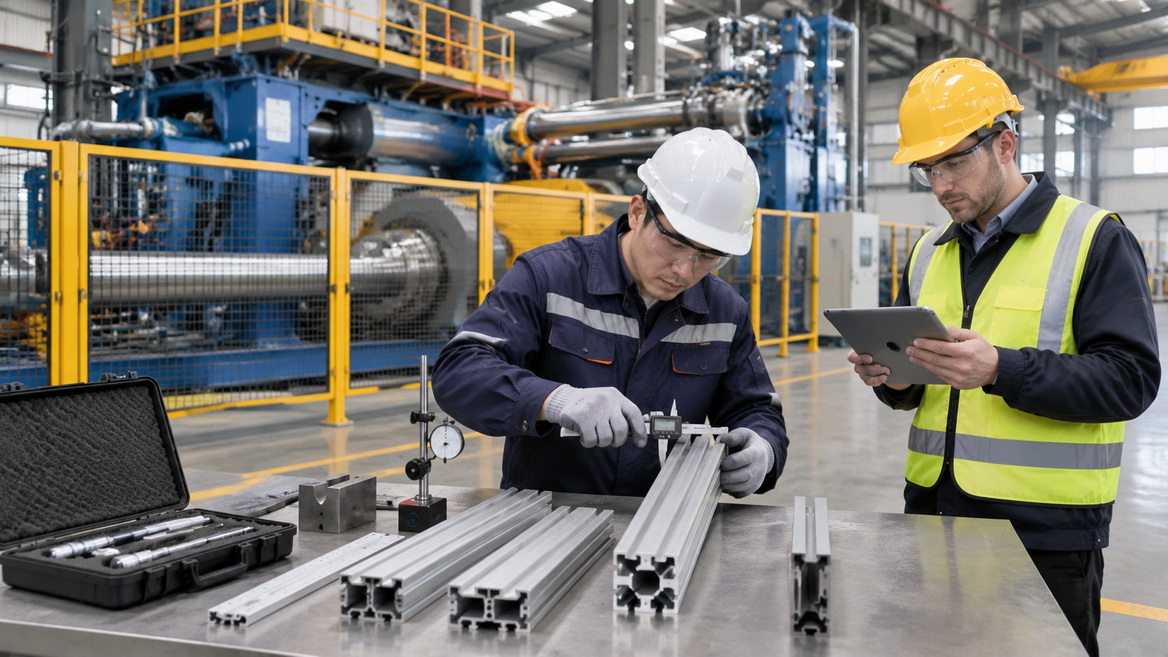
Request a component-level transport schedule showing shipping dimensions, weights, lifting points, preservation requirements, and assembly sequence.
Then coordinate the equipment package with the destination site's access, crane capacity, foundation design, utilities, and installation timetable. A press quotation should not leave heavy-lift planning and foundation interfaces until after shipment.
Italy offers credible extrusion press and plant-engineering options through Presezzi Extrusion, Danieli Breda, OMAV, and Cometal Engineering. Their documented capabilities span tailored presses, complex material applications, and integrated production systems.
Xinxinke, Yejing, and Sailixin provide additional China-based options for buyers comparing customization scope, capital expenditure, and complete-line supply. They should be evaluated against the same technical, quality, compliance, and acceptance requirements as Italian suppliers.
To begin a structured discussion with Xinxinke Co., Ltd., submit your alloy grades, billet dimensions, profile drawings, annual output target, destination country, and automation requirements. Request a proposal that separates the equipment scope, performance conditions, inspection records, commissioning responsibilities, and lifecycle support.
Check the legal entity, factory address, certification scope, issuer, certificate number, and expiry date. Then confirm current status with the issuing certification body, including whether the certificate has been suspended or withdrawn.
For suppliers displaying certificate claims, such as Yejing and Sailixin, request the actual documents rather than relying on website wording.
Do not approve dual-material capability from a general product description alone. Ask the supplier to substantiate the proposed configuration for each material, including tooling, thermal requirements, operating conditions, and changeover procedures.
Xinxinke and Presezzi publicly identify both copper and aluminum within their scope, but the suitability of a particular machine still requires application-specific confirmation.
Clarify the expected EU market-placement date and the applicable legal framework before signing. Assign responsibility for any necessary design, documentation, or validation changes.
The European Commission states that Machinery Regulation (EU) 2023/1230 becomes mandatory on 20 January 2027; the purchase-order date alone should not be used to settle the compliance question.
Require the same measurement boundary, alloy, profile mix, operating period, and output definition. Separate the press-only figure from the complete-line figure.
This distinction matters when evaluating environmental claims: European Aluminium's recent report concerns defined extrusion-process datasets, not an unrestricted guarantee for an individual machine.
Appoint a lead integrator and define responsibility for shared interfaces, test conditions, troubleshooting, and retesting. Avoid a contract structure in which every supplier guarantees only its own isolated machine.
Complete-line suppliers such as OMAV, Presezzi, and Cometal may offer broader coordination scope, but the actual responsibility must still appear in the contract.
- [European Aluminium: Environmental Profile Reports] — Publication background and environmental-performance context. [european-aluminium]
- [European Aluminium: Environmental Profile Report 2024] — Process boundaries, underlying data periods, and extrusion environmental indicators. [european-aluminium]
- [European Aluminium: Industry Overview] — European value-chain information and trade context. [european-aluminium]
- [European Commission: Machinery Legislation] — Official guidance on the machinery framework and 2027 transition. [single-market-economy.ec.europa]


