
Please Choose Your Language
Views: 273 Author: Xinxinke Extrusion Publish Time: 2026-10-18 Origin: Site


Content Menu
● Why Source an Aluminum Homogenizing Furnace from China?
>> A Large Aluminum Industry Supports Specialized Equipment Demand
>> Foshan Offers an Integrated Procurement Ecosystem
● Selection Criteria: How to Evaluate a Qualified Supplier
● Understanding Aluminum Homogenizing Furnace Technology
>> Homogenizing Is Not the Same as Billet Preheating
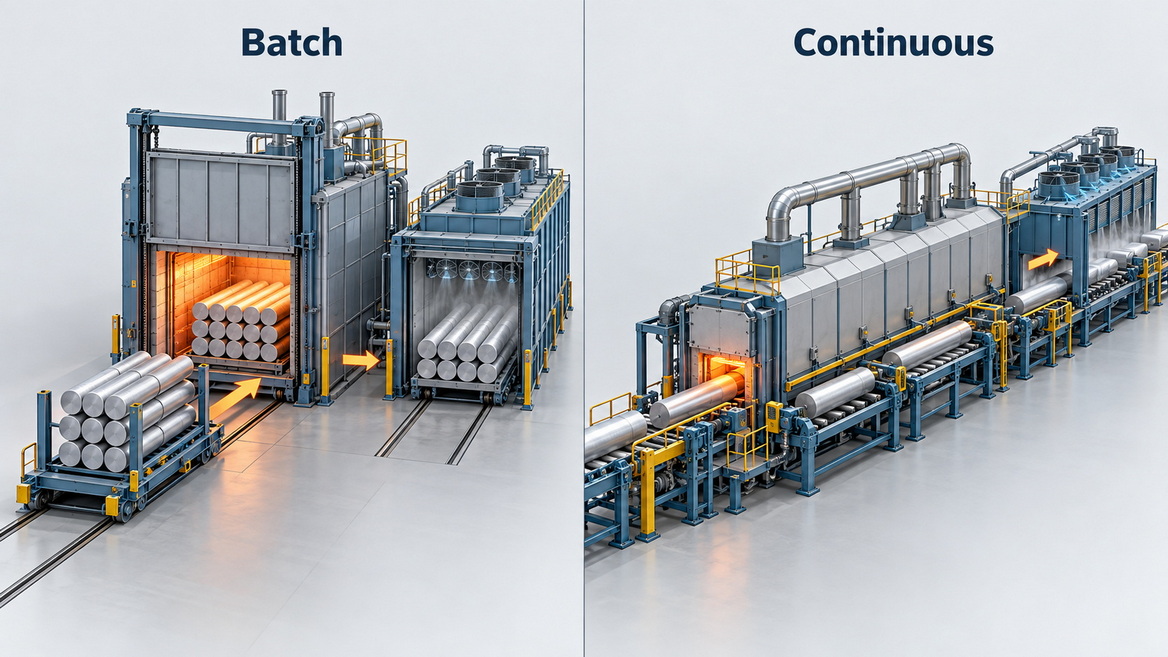
>> Batch Versus Continuous Systems
>> Temperature Claims Need a Measurement Definition
>> Materials and Compliance Require Project-Specific Review
● Top 10 Aluminum Homogenizing Furnace Manufacturers and Suppliers in China
>> 2. Foshan Nanhai Huitai Technology Machinery Co., Ltd.
>> 4. Foshan Jianeng Jingjin Technology Co., Ltd.
>> 5. Foshan Shijia Intelligent Industrial Equipment Technology Co., Ltd.
>> 7. Foshan Henghui Aluminum Innovation International Trade Co., Ltd.
>> 8. Lvyuan Smart Machine Manufacture (Guangdong) Co., Ltd.
>> 9. Foshan Dynamax Industry Co., Ltd.
>> 10. SECO/WARWICK — China Operations
● Supplier Comparison: Capacity, MOQ, and Certification Evidence
● Buyer's Guide: From Shortlist to Purchase Order
>> 1. Verify the Factory and Contracting Entity
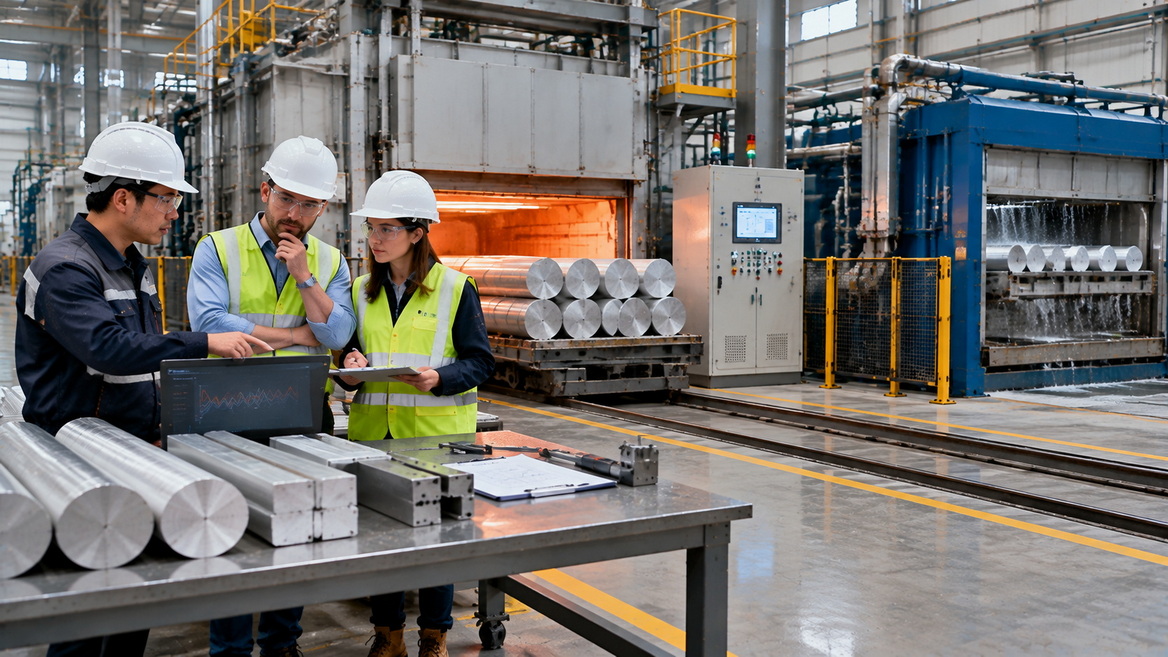
>> 2. Send a Complete Technical RFQ
>> 3. Use Representative Trials Instead of Generic "Samples"
>> 4. Define Quality Controls Against Material Substitution
>> 5. Plan Logistics Before Finalizing the Design
● An Overlooked Procurement Trap: The Spacer Layout Can Change the Test Result
● Common Purchasing Pitfalls and How to Avoid Them
● Conclusion: Select the Supplier That Can Prove the Proposed System
● FAQ
>> 1. How Can I Verify Whether a Manufacturer's ISO Certificate Has Expired?
>> 2. Does a CE Mark Prove That the Furnace Will Achieve Its Promised Throughput?
>> 3. Is RoHS Certification Mandatory for Every Industrial Homogenizing Furnace?
>> 4. How Should I Compare Two Suppliers' Energy-Consumption Guarantees?
>> 5. When Should I Choose Continuous Homogenizing Instead of a Batch Furnace?
Choosing an aluminum homogenizing furnace supplier is a long-term production decision, not simply an equipment purchase. The right system must deliver repeatable billet treatment, match the plant's casting and extrusion requirements, and remain serviceable after installation.
China offers a substantial supplier base, particularly around Foshan, Guangdong, where extrusion machinery, billet-processing equipment, and aluminum melting and casting suppliers operate within the same regional ecosystem. Xinxinke, Huitai, Shijia, and several other companies in this guide illustrate that concentration. For international buyers, this creates opportunities to coordinate furnace procurement with material handling and downstream extrusion equipment.
However, supplier visibility does not automatically establish furnace performance. Before selecting a partner, procurement managers should examine manufacturing identity, engineering capability, quality-control records, loaded-furnace testing, delivery milestones, and commissioning responsibilities.
This guide presents ten manufacturers and equipment suppliers worth evaluating, explains where their publicly documented capabilities differ, and provides a practical framework for comparing quotations.
Publication note: This is a procurement shortlist, not an independently audited market-share ranking. Xinxinke appears first as the commissioning company. Manufacturer statements are identified as such, and undisclosed founding dates, certifications, or capacities are not replaced with estimates. Companies with mixed manufacturing and trading roles require additional factory verification.

China's aluminum production scale provides important context for its industrial equipment ecosystem.
The Aluminum Association's 2026 industry priorities report states that China's share of global primary aluminum output increased from 11% to 61% over approximately two decades. Separately, Reuters reported that Chinese primary aluminum production grew 2.6% year over year in the first quarter of 2025, citing International Aluminium Institute data.
These figures describe primary metal production—not homogenizing furnace sales, installed capacity, or supplier market share. They support the broader industrial context but should not be used to claim that a particular furnace manufacturer leads the market.
For current production statistics, buyers can consult the International Aluminium Institute's primary aluminum production database. Its definition covers metal tapped from electrolytic cells before subsequent processing.
Foshan is particularly relevant to buyers planning an integrated billet-to-profile operation.
Xinxinke supplies extrusion presses and auxiliary equipment. Huitai lists melting, holding, homogenizing, cooling, charging, and casting equipment. Shijia identifies aluminum billet homogenization and sawing/stacking equipment within its product scope.
The procurement advantage is coordination: buyers can potentially source several connected process stages within one region. The corresponding risk is divided responsibility. Contracts should identify who is accountable for the furnace, cooler, transfer equipment, controls, and interfaces between suppliers.
The most useful comparison begins with evidence rather than promotional language.
For this shortlist, the principal screening dimensions are:
1. Product relevance: Public evidence of aluminum billet homogenizing equipment, rather than only melting, aging, or general heat-treatment furnaces.
2. Engineering scope: Ability to discuss furnace configuration, cooling, handling, utilities, and integration.
3. Manufacturing transparency: A clear distinction between the selling company, fabrication facility, and subcontractors.
4. Performance documentation: Defined temperature measurement methods, useful-load limits, and acceptance conditions.
5. Quality and compliance: Verifiable management-system certificates and applicable product conformity documentation.
6. Delivery and support: Contractual milestones, installation responsibilities, training, and spare-parts arrangements.
A certificate should support this assessment, not replace it. IAF CertSearch allows buyers to check certificate status, scope, issuing certification body, and related accreditation information.
The decisive purchasing principle is verification: convert every commercially important claim into a document, inspection requirement, or measurable acceptance criterion.
An aluminum homogenizing furnace treats cast billets before downstream processing. Supplier descriptions identify reduction of casting-related segregation and microstructural nonuniformity among its purposes, alongside improved plasticity and reduced extrusion resistance.
A billet heating furnace prepares material for extrusion, while an aging furnace performs a different heat-treatment stage. These product categories should not be treated as interchangeable when requesting quotations.
Batch systems offer flexibility where billet sizes, alloy recipes, or production schedules vary. Continuous systems are generally considered where sustained throughput and a more consistent product mix justify automated material flow.
Hertwich identifies batch homogenizing as suitable for long holding times, large log diameters, frequent temperature changes, and intermittent production. Its continuous systems target mainstream AA6000-series applications. SECO/WARWICK similarly describes continuous log homogenizers for higher-production operations, alongside batch configurations with handling and cooling equipment.
The correct choice therefore depends on more than daily tonnage. Buyers should also evaluate:
- Alloy mix and required holding periods.
- Billet diameter and length range.
- Frequency of recipe changes.
- Casting schedule and buffer storage.
- Cooling capacity and handling availability.
- Future expansion plans.
MSGC publishes a temperature accuracy of ±5°C and an 8–60-ton capacity range for its aluminum billet homogenizing furnace. Jianeng Jingjin's product page describes heating to approximately 570°C ±5°C or the process-required temperature.
These are supplier-specific specifications, not universal acceptance standards.
An RFQ should distinguish controller accuracy, furnace air-temperature uniformity, and actual billet-core temperature. Buyers should also state whether the acceptance test must use a full representative load.
Instead of requesting an undefined "high-temperature stainless steel" specification, ask suppliers to identify the material grades used for hot-zone components, fan assemblies, load supports, and other temperature-exposed parts. The contract should define which components require material certificates and whether substitutions need written approval.
CE marking indicates conformity with applicable European requirements; it is not an environmental performance award. RoHS concerns restricted substances in electrical and electronic equipment, and its scope includes exclusions for qualifying large-scale stationary industrial tools and fixed installations. Applicability must be assessed for the actual equipment configuration.
Consequently, "CE/RoHS available" is not an adequate compliance specification for a complete furnace installation.
Xinxinke is a Foshan-based manufacturer of copper and aluminum extrusion equipment. Its website states that the company was founded in 1991 and lists homogenizing furnaces among its extrusion-line auxiliary equipment. It also describes in-house machining facilities and customized equipment solutions.
- Established: 1991, according to the company.
- Main markets: Southeast Asia, Europe, and the United States, according to its website.
- Core strength: Coordination between extrusion machinery and auxiliary equipment.
- Customization scope: Bespoke extrusion equipment and auxiliary-system requirements; furnace-specific limits require a technical proposal.
For small and medium-sized extrusion businesses, Xinxinke is a relevant candidate when the purchasing objective is a coordinated equipment package rather than a standalone furnace.
Its cost-effectiveness should be assessed through installed cost, technical scope, and lifecycle support—not assumed from the initial quotation. Likewise, communication efficiency and customization depth should be tested during the RFQ stage through response quality, drawing revisions, and a named project contact.
Buyer checkpoint: Request separate furnace references, batch capacity, loaded-temperature guarantees, cooling specifications, and compliance documents. The company's published annual output of approximately 200 equipment units should not be interpreted as annual homogenizing furnace production.
Huitai has a directly relevant product portfolio covering aluminum melting, holding, homogenizing, cooling, charging, and casting equipment. Its homogenizing-system page states that the business was founded in 2008 and describes engineering around production requirements, plant conditions, and existing equipment.
- Established: 2008, according to its product website.
- Main markets: Domestic and overseas customers; specific regional sales shares are not disclosed.
- Core strength: Integration across aluminum melting, casting, and billet treatment.
- Customization scope: Natural-gas, electric, and diesel heating configurations, plus equipment integration.
Huitai is worth evaluating for buyers planning a broader casting and homogenizing project.
Buyer checkpoint: Confirm the exact heating arrangement, burner and fan specifications, cooling guarantees, and responsibility for coordination with the casting line.
MSGC publishes comparatively detailed specifications for an aluminum billet homogenizing system, including a furnace, cooling chamber, three-dimensional charging cart, and platform. Its product page lists capacities of 8–60 tons and Siemens PLC and touchscreen controls.
- Established: Not verified in the reviewed source.
- Main markets: Not specifically disclosed in the reviewed product page.
- Core strength: Publicly stated batch-system parameters.
- Customization scope: Custom-made furnace systems, with configuration to be confirmed in the quotation.
The supplier also publishes natural-gas consumption of 25–35 m³ per ton of aluminum billet. Buyers should treat this as a supplier-stated figure and request its test conditions rather than compare it directly with another quotation.
Buyer checkpoint: Clarify whether consumption includes heat-up, holding, standby, and auxiliary electricity, and identify the billet load and recipe used.
Jianeng Jingjin states that it was founded in 1999 and specializes in aluminum extrusion auxiliary equipment. Its homogenizing furnace page describes treatment at approximately 570°C ±5°C, or the required process temperature, followed by rapid cooling.
- Established: 1999, according to the company.
- Main markets: Not verified in the reviewed pages.
- Core strength: Extrusion auxiliary equipment.
- Customization scope: Process-temperature requirements are referenced; detailed handling and control options require confirmation.
This supplier is relevant when homogenizing equipment must fit into an existing extrusion-related production setup.
Buyer checkpoint: Request a clear separation between air-temperature control, loaded uniformity, billet-core measurement, and cooling performance.
Shijia identifies itself as an aluminum-processing equipment research and development enterprise located in Shishan, Nanhai, Foshan. Its stated products include aluminum rod homogenization furnaces and sawing/stacking production lines.
- Established: Not verified in the reviewed sources.
- Main markets: Not verified in the reviewed sources.
- Core strength: Billet-processing equipment and related automation.
- Customization scope: Homogenizing and handling-line engineering should be defined through a project-specific proposal.
Shijia is a useful candidate where billet handling and stacking are substantial parts of the project.
Buyer checkpoint: Ask whether the quoted package includes stacking, spacers, transfer equipment, cooling, safety interlocks, and production-data recording.
Zhelu publishes an aluminum homogenizing furnace offering. Its public contact information identifies a Foshan business presence and a related company contact in Vietnam. The product page describes accommodation of different workpiece sizes and batch or continuous processing.
- Established: Not verified in the reviewed sources.
- Main markets: A China–Vietnam commercial presence is documented; broader market coverage is not verified.
- Core strength: Access to aluminum-processing equipment within a regional supply network.
- Customization scope: Published batch and continuous options require clarification against an actual billet specification.
Buyer checkpoint: Identify the contracting legal entity and fabrication facility. Confirm which furnace designs are manufactured directly and which are sourced from partners.
Henghui's website describes aluminum melting and casting equipment expertise and lists homogenizing furnace configurations. Published examples include a 15-ton system with heating chamber, cooling chamber, and charging cart, alongside other advertised capacities.
- Established: Exact founding year not verified; the website states 20 years of sector experience.
- Main markets: Not specifically verified in the reviewed source.
- Core strength: Melting, casting, and homogenizing equipment packages.
- Customization scope: Complete supporting equipment and project solutions are advertised.
The company's international-trade identity makes manufacturing-role verification especially important. A trading company can still manage a successful project, provided fabrication responsibility and technical accountability are transparent.
Buyer checkpoint: Confirm who manufactures the furnace, issues the warranty, supplies replacement components, and performs commissioning.
Lvyuan appears in a marketplace listing for an automatic aluminum billet homogenizing furnace for casting lines. The directory identifies a Guangdong supplier and displays an audited-supplier designation.
- Established: Not verified in the reviewed listing.
- Main markets: Not verified in the reviewed listing.
- Core strength: A directly relevant advertised product category.
- Customization scope: Not established by the directory evidence alone.
This is an initial RFQ candidate rather than a fully documented technical selection.
Buyer checkpoint: Obtain the audit report, business license, factory address, completed-project evidence, and a signed specification. The listing's "1 ton" MOQ field should not be interpreted as a meaningful equipment ordering requirement without clarification.
Dynamax is listed with a 10-ton aluminum bar homogenizing furnace associated with extrusion equipment. The same directory describes the business as both a manufacturer/factory and trading company, with an advertised MOQ of one piece.
- Established: Not verified in the reviewed listing.
- Main markets: Not verified in the reviewed listing.
- Core strength: A defined 10-ton advertised furnace offering.
- Customization scope: Furnace and extrusion-line options require direct confirmation.
Buyer checkpoint: Establish which components are made in-house and whether the quoted "piece" includes cooling and loading equipment. Do not assume the advertised furnace capacity equals accepted daily throughput.
SECO/WARWICK offers custom aluminum homogenizing systems covering batch and continuous designs, material handling, and load cooling. Its group documentation identifies production facilities in China, while its China anniversary account dates the relevant local operating expansion to 2010.
- Established: The cited China operating expansion began in 2010; group history also records an earlier Tianjin joint venture.
- Main markets: International industrial customers through the wider group.
- Core strength: Batch and continuous thermal-processing configurations.
- Customization scope: Car and tray furnaces, continuous systems, cooling arrangements, handling, and controls.
This is an international manufacturer with Chinese operations, not a China-origin brand. Buyers should confirm the manufacturing location of the specific homogenizing furnace being proposed.
Buyer checkpoint: Define the contracting entity, fabrication location, local service arrangement, and responsibility for imported components.
Capacity below means published furnace load or configuration—not annual factory output or guaranteed tons per day.
"Not verified" means the reviewed evidence did not establish the information. It does not mean the supplier lacks it.
| Supplier | Primary focus | Published furnace capacity | MOQ evidence | Certification evidence reviewed |
|---|---|---|---|---|
| Xinxinke | Extrusion machinery and auxiliary equipment | Not publicly verified | Confirm per project | Current furnace-specific documents not verified |
| Huitai | Melting, casting, homogenizing, and cooling | Confirm per configuration | Confirm per project | Current documents not verified |
| MSGC | Batch homogenizing package | 8–60 tons msgroupchina | Confirm per project | Current documents not verified |
| Jianeng Jingjin | Extrusion auxiliary equipment | Not verified | Confirm per project | Current documents not verified |
| Shijia | Homogenizing and billet-handling equipment | Not verified | Confirm per project | Current documents not verified |
| Zhelu | Aluminum-processing equipment supply | Batch/continuous advertised; tonnage unverified zhelumaterials | Confirm per project | Current documents not verified |
| Henghui | Melting/casting equipment packages | 15-ton system and other configurations advertised aluminummeltfurnace | Confirm per project | Current documents not verified |
| Lvyuan | Casting-line homogenizing equipment | Not reliably established | Directory displays “1 ton”; clarify made-in-china | Marketplace audit badge only; not product certification |
| Dynamax | Extrusion-related furnace equipment | 10-ton model advertised made-in-china | One piece advertised made-in-china | Marketplace audit badge only; not product certification |
| SECO/WARWICK China | Engineered thermal-processing systems | Custom batch/continuous systems secowarwick | Confirm per project | Project-specific documents require verification |
A supplier-audit badge, ISO management-system certificate, and product conformity declaration answer different questions. They should not be combined into a single "certified factory" label.
Before paying a deposit, request:
- Registered company name and business license.
- Fabrication address and factory-tour access.
- Identification of subcontracted assemblies.
- Comparable furnace project references.
- Organization chart for engineering and service.
- Current certificates with certificate numbers.
- Confirmation that the payment recipient matches the approved contracting arrangement.
For management-system certification, check the legal entity, covered site, scope, and current status—not just a logo on a brochure.
Every shortlisted supplier should receive the same operating assumptions:
- Alloy grades and composition ranges.
- Billet diameters, lengths, and loading patterns.
- Required accepted tons per day.
- Temperature recipes and holding periods.
- Cooling requirements.
- Fuel composition and supply pressure.
- Electrical supply and utility limits.
- Available floor space.
- Automation and data-recording requirements.
- Destination-country compliance requirements.
This makes quotations more comparable and exposes exclusions early.
For a capital-equipment purchase, a small material sample cannot demonstrate the performance of a complete loaded furnace.
Where feasible, arrange a representative trial using the intended billet alloy, dimensions, stack arrangement, and process recipe. Specify what data must be collected and who will witness the test.
The acceptance package should address billet-temperature records, cycle duration, cooling performance, utility consumption, and the agreed metallurgical checks.
A practical prevention measure is a controlled bill of materials.
Identify critical components such as:
- Hot-zone structural and support materials.
- Fans and motors.
- Burners and combustion controls.
- Insulation systems.
- Thermocouples and instruments.
- PLCs, drives, and electrical protection devices.
Require written approval for substitutions. Where material grade affects service life or safety, specify the documentation and inspection method before manufacture.
Ask for a preliminary packing and shipping plan covering:
- Maximum package dimensions and weights.
- Containerized versus oversized transport.
- Lifting points and unloading requirements.
- Site assembly sequence.
- Moisture protection.
- Spare-parts packing.
- Installation tools and customer-supplied equipment.
The lowest equipment price may not produce the lowest installed cost if transport, foundations, cranes, or commissioning have been excluded.
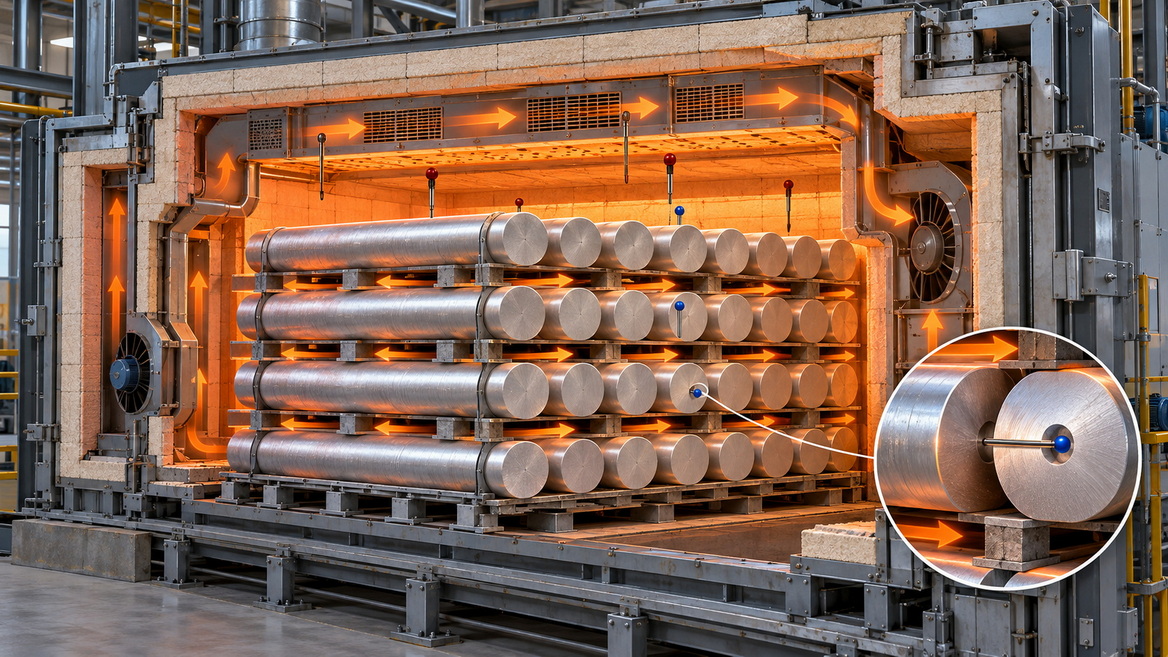
One easily overlooked issue is whether the supplier's performance test uses the same billet stacking and spacer arrangement as normal production.
This matters because homogenizing systems depend on airflow and load handling. SECO/WARWICK specifically discusses airflow patterns, baffle design, and multiple cooling arrangements; Hertwich includes spacer handling within automated batch-system configurations.
A useful contractual safeguard is to make the approved load drawing part of the acceptance specification.
Record:
- Billet dimensions and alloy.
- Total useful load.
- Number of layers.
- Spacer dimensions and spacing.
- Temperature-sensor locations.
- Starting temperature.
- Heating and cooling recipes.
Then require performance acceptance under that representative arrangement. An empty-furnace demonstration or unusually open test stack should not substitute for the buyer's intended production load.
| Purchasing pitfall | Commercial consequence | Practical safeguard |
|---|---|---|
| Comparing tons per batch with tons per day | Capacity may be overstated | Require a complete cycle and throughput calculation |
| Accepting controller accuracy as billet uniformity | Treatment consistency remains uncertain | Define loaded billet-temperature testing |
| Leaving cooling outside the supplier’s responsibility | The production cycle may be incomplete | Include cooler capacity and handover conditions |
| Accepting unspecified material grades | Component life becomes difficult to assess | Approve materials and substitution rules |
| Treating “CE available” as complete compliance | Documentation may not match the supplied system | Request configuration-specific conformity documents |
| Leaving PLC access and service rights undefined | Maintenance may depend entirely on the original supplier | Agree backups, access rights, and remote support before purchase |
China offers multiple procurement routes: integrated extrusion-equipment manufacturers, aluminum casting specialists, regional equipment suppliers, and international thermal-processing companies with local operations.
The strongest selection is the supplier that can translate the buyer's alloy mix, billet dimensions, production schedule, and compliance obligations into an inspectable furnace specification.
Xinxinke is worth including when the project involves both extrusion machinery and auxiliary equipment. Its published background dates to 1991, and its product range includes homogenizing furnaces and customized extrusion solutions. Furnace-specific performance and support commitments should still be verified in the same way as those of every other candidate.
For a project-specific discussion, send Xinxinke your billet sizes, alloy grades, daily output target, utilities, and plant layout. Request an itemized proposal covering the furnace, cooling, handling, controls, acceptance testing, installation, and spare parts. The company lists sales@xxkextrusion.com and +86-757-85229668 as its contact details.
Search by the exact certificate number or company name in IAF CertSearch. Review the status, legal entity, covered site, standard, and scope.
The platform distinguishes active, suspended, withdrawn, and expired certificates. If a claimed certificate cannot be found, contact the issuing certification body and request confirmation rather than relying only on a scanned document.
No. CE marking concerns conformity with applicable European requirements; it does not establish a contractual production-capacity guarantee.
Throughput should be addressed separately through an agreed load, recipe, complete cycle time, and acceptance test. Include cooling and material handling in that calculation.
Not automatically.
The European Commission's guidance identifies exclusions for qualifying large-scale stationary industrial tools and large-scale fixed installations. Whether a furnace or associated equipment falls within an exclusion depends on the actual configuration and applicable definitions.
Request a written applicability assessment rather than a generic statement that every furnace either requires or is exempt from RoHS.
Require the same basis of comparison.
Specify the alloy, billet dimensions, load mass, starting temperature, process recipe, fuel properties, and measurement boundaries. State whether the guarantee includes holding, standby, auxiliary electricity, and cooling.
For example, MSGC publishes natural-gas consumption of 25–35 m³ per ton, but the figure needs its operating conditions before it can support a fair comparison.
Consider continuous equipment when sustained throughput and a relatively consistent product mix justify its operating model. Batch equipment deserves closer consideration when production is intermittent, recipes change frequently, billets are large, or holding times are long.
These distinctions are reflected in Hertwich's published batch/continuous guidance and SECO/WARWICK's description of continuous systems for higher-production operations.
Compare both options using the complete production schedule—not only the furnace's advertised maximum capacity.
- International Aluminium Institute: Primary Aluminium Production — industry production definitions and statistics. [international-aluminium]
- The Aluminum Association: 2026 Aluminum Industry Priorities — current industry context and China's share of primary production. [aluminum]
- European Commission: RoHS 2 guidance — CE marking, scope, and large-scale equipment exclusions. [environment.ec.europa]
- IAF CertSearch: Certificate verification guidance — certificate status, scope, and accreditation checks. [iafcertsearch]
- Manufacturer websites and product pages — company histories, equipment offerings, and supplier-stated specifications. These are not independent performance audits. [xxkextrusion]


