
Please Choose Your Language
Views: 239 Author: Xinxinke Extrusion Publish Time: 2026-10-08 Origin: Site


Content Menu
● What Is an Indirect Extrusion Press?
>> Main Components of an Indirect Aluminum Extrusion Press
● How Does an Indirect Extrusion Press Work Step by Step?
>> 1. Prepare the Billet and Tooling
>> 2. Load the Billet and Close the Container
>> 3. Apply Force and Start Metal Flow
>> 4. Guide the Extrusion Through the Hollow Stem
>> 5. Complete the Cycle and Finish the Product
● Why Indirect Extrusion Can Reduce Forming Force
>> Lower Force Does Not Automatically Mean Lower Energy Cost
● Direct vs. Indirect Aluminum Extrusion Presses
● Where Indirect Extrusion Offers Practical Value
>> Precision Aluminum Rod and Bar
>> High-Strength Aluminum Alloys
>> Products with Demanding Consistency Requirements
● Process Controls That Protect Product Quality
>> Establish a Billet Cleanliness Standard
>> Monitor Temperature Throughout the Process
>> Inspect Hollow-Stem Condition and Alignment
● Common Quality Problems and What to Investigate
● How to Evaluate an Indirect Extrusion Press Before Purchase
>> Create a Product-Specific Acceptance Plan
>> Define Every Performance Measurement
● Compare Cost per Accepted Tonne
● Choosing an Extrusion Solution with Xinxinke
>> Is Indirect Extrusion the Same as Backward Extrusion?
>> Does Indirect Extrusion Eliminate All Friction?
>> Can an Indirect Extrusion Press Produce Every Aluminum Profile?
>> Does Indirect Extrusion Always Reduce Scrap?
>> Is Indirect Extrusion Suitable for High-Strength Aluminum?
An indirect extrusion press shapes a heated metal billet by forcing it through a die without making the billet slide against the container wall. The die and billet move relative to each other, while the billet remains stationary relative to its container. This removes a major source of friction found in direct extrusion.
For aluminum manufacturers, this difference can reduce forming force and support more consistent dimensions and metallurgical properties. However, indirect extrusion also requires careful billet preparation, suitable tooling, and an understanding of its profile-size limitations.
At Xinxinke Co., Ltd., we manufacture copper and aluminum profile extrusion equipment and provide customized solutions backed by more than 30 years of industry experience. We believe equipment selection should begin with the alloy, product drawing, and production requirements—not press tonnage alone.
This guide explains how an indirect aluminum extrusion press operates, where it delivers practical value, and what manufacturers should evaluate before selecting equipment.

An indirect extrusion press forms metal through controlled movement between a die and a billet without causing the billet to slide along the container.
The process is also known as backward extrusion. In a common arrangement, the die is supported by a hollow stem, and the extruded material passes through the die opening into that stem.
Industrial machines can use different movement arrangements. Some move the container and billet toward a fixed die-supporting assembly. Others move the die assembly toward the billet.
The defining feature remains the same: there is no relative sliding between the billet and container during extrusion.
An indirect extrusion system typically includes:
- A press frame that withstands the forming load.
- A hydraulic system that generates and controls force.
- A heated container that supports the billet.
- An extrusion die that determines the product cross-section.
- A hollow stem that supports the die and provides an exit passage.
- A closing arrangement that contains the billet.
- Controls for pressure, movement, speed, and process monitoring.
A complete production line also requires billet heating, material handling, product cooling, and downstream finishing equipment.
The operating sequence explains both the advantages of indirect extrusion and the conditions needed to achieve them.
The billet must meet the specified alloy, dimensions, and metallurgical condition.
Surface preparation is particularly important. Because the billet does not slide against the container, surface contamination can enter the extrusion and affect the finished product.
Depending on the application, preparation may include removing the as-cast surface layer. Clean storage and handling must follow that preparation.
The billet, die, and container must also reach suitable operating temperatures. These settings depend on the alloy, profile, tooling, and production requirements.
The prepared billet enters the container, and the closing arrangement establishes the required support.
The container, die, hollow stem, and press movement must remain correctly aligned. Poor alignment can affect product quality and expose tooling to unwanted loads.
Before starting the cycle, operators should verify tooling installation and confirm the machine's required safety conditions.
In a common configuration, the die sits at the end of a fixed hollow stem. The main ram moves the closed container and billet toward the die.
The die therefore advances into the billet relative to the container. Under pressure, the metal deforms and flows through the die opening.
Although the container moves within the machine, the billet does not slide along its internal wall. This distinction explains the process's reduced friction.
The emerging product passes through the hollow stem.
This creates an important geometric restriction. The profile must fit within the available passage, while the stem must remain strong enough to withstand the forming load.
Consequently, billet diameter alone does not determine the maximum profile size.
Operators monitor force, extrusion speed, temperature, and product condition throughout the cycle.
The cycle ends before the remaining material or changing conditions compromise quality. Residual billet material and subsequent trimming still generate losses.
The extrusion then receives the cooling, stretching, cutting, and heat treatment required by its specification. Indirect extrusion does not eliminate the need for controlled downstream processing.
In direct extrusion, the billet moves along the container wall. The press must overcome that sliding resistance while also deforming the metal through the die.
Indirect extrusion removes the billet-to-container sliding component.
This can lower the required extrusion force and create more consistent forming conditions over the stroke. However, resistance remains within the deforming metal, at the die, and elsewhere in the system.
Indirect extrusion therefore reduces an important source of friction; it does not eliminate all friction.
A lower forming load creates an efficiency opportunity, but it does not establish the energy consumption of the complete line.
Billet heating, hydraulic efficiency, idle time, auxiliary equipment, and production interruptions also influence energy use.
For a meaningful comparison, measure energy per accepted tonne of finished product using clearly defined system boundaries.
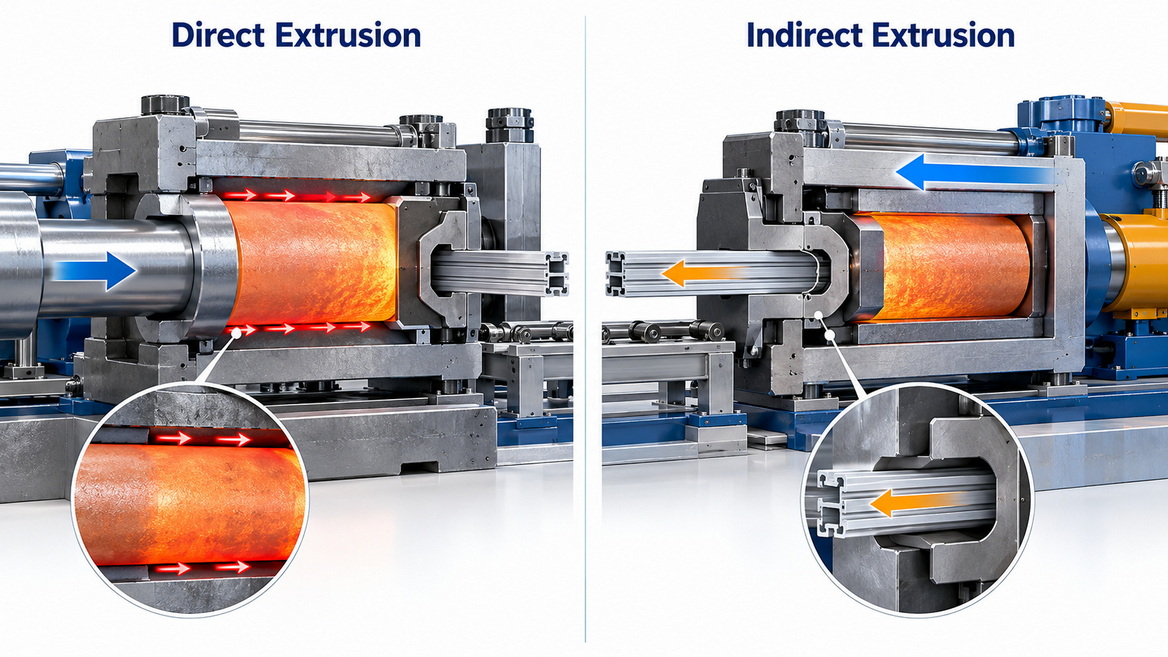
Both methods can produce high-quality aluminum products. Their suitability depends on the alloy, geometry, production mix, and finished-product requirements.
| Selection factor | Direct extrusion | Indirect extrusion |
|---|---|---|
| Billet movement | Slides relative to the container | Remains stationary relative to the container |
| Forming resistance | Includes container sliding friction | Removes that friction component |
| Profile envelope | Not limited by an indirect hollow stem | Limited by stem passage and strength |
| Process conditions | Must account for changing sliding friction | Can offer more consistent forming conditions |
| Billet preparation | Depends on the application | Surface preparation is especially important |
| Purchase evaluation | Product range and complete-line performance | Product suitability, tooling limits, and complete-line performance |
The most useful purchasing question is not which method is universally better. It is which production system can deliver the required product at the lowest verified cost per accepted tonne.
Indirect extrusion can be valuable for rod, bar, and machining stock where dimensional and metallurgical consistency matter.
More uniform properties along the extrusion can help stabilize downstream machining behavior. This is especially relevant when variation leads to inconsistent cutting performance or excessive machining allowances.
However, final performance still depends on billet quality, die design, process control, and heat treatment. The extrusion method alone does not guarantee precision.
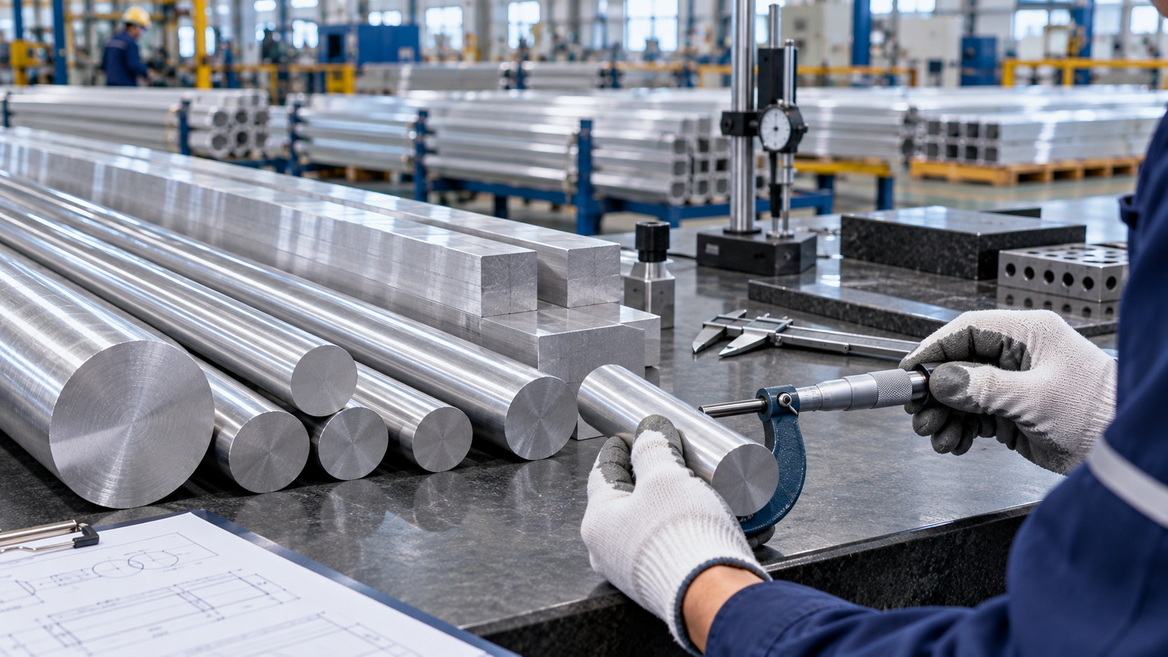
Indirect extrusion is relevant to difficult-to-extrude alloys, including certain AA2xxx and AA7xxx applications.
Removing container sliding friction reduces one component of the required forming force. That can help support processing of alloys that place greater demands on the press and tooling.
Alloy selection should therefore enter the equipment discussion early. A machine specified for one production family may not be suitable for another without changes.
The process deserves consideration when recurring dimensional or metallurgical variation creates rejection, rework, or unstable downstream operations.
The commercial opportunity is strongest when improved consistency addresses an identifiable production problem.
Changing the extrusion method will not correct unsuitable billets, poor tooling, or uncontrolled finishing processes.
Billet preparation should follow a documented acceptance standard covering surface condition, contamination, storage, and handling.
A properly prepared billet can become contaminated before loading. Quality control must therefore cover the complete handling sequence, not only the surface-removal operation.
The furnace setting is only one part of temperature control.
Billet temperature distribution, tooling temperature, deformation heating, and subsequent cooling all affect the product.
A useful monitoring plan connects these variables to the specific alloy and customer requirements rather than relying on a single temperature reading.
The hollow stem serves as both a structural component and a product passage.
Its alignment, condition, and operating limits require specific inspection procedures. Abnormal force trends, visible damage, or persistent product contact should trigger investigation.
Adjustments must follow the equipment manufacturer's procedures rather than improvised operating changes.
Troubleshooting should begin with inspection results and recorded process conditions.
| Observed problem | Initial investigation areas |
|---|---|
| Surface defects | Billet contamination, surface preparation, die condition, product contact |
| Dimensional variation | Die design, thermal stability, alignment, stretching conditions |
| Inconsistent machining | Billet metallurgy, extrusion conditions, heat treatment |
| Unexpected force changes | Billet temperature, alloy condition, tooling condition, movement resistance |
| Low accepted output | Handling delays, cycle time, trimming losses, rejected products |
These are investigation starting points, not final diagnoses.
Maintain records by billet batch, die, operating recipe, and inspection result. Traceable data makes recurring problems easier to isolate and prevents unsupported conclusions.
A representative production trial provides stronger evidence than a general claim about machine performance.
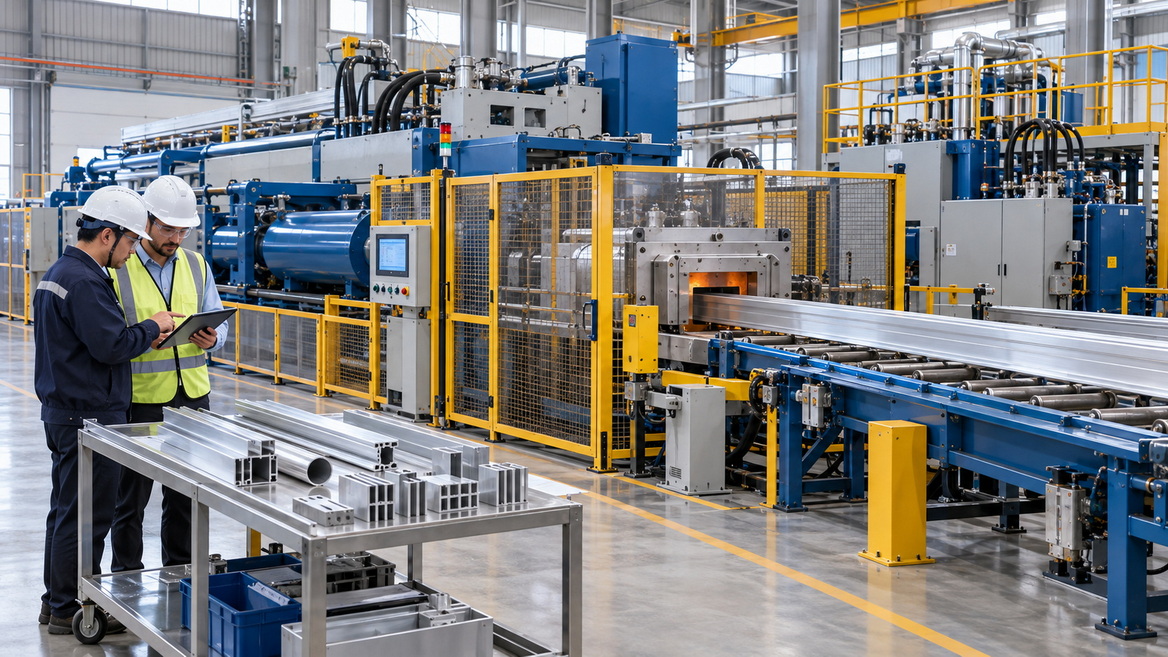
Agree on the trial conditions before testing:
1. Select the production alloy and billet condition.
2. Choose a representative profile, including demanding geometry.
3. Define dimensional, surface, and mechanical requirements.
4. Specify sampling positions along the product.
5. Record force, speed, temperature, cycle time, and material losses.
6. Inspect the finished product after the required downstream treatment.
Acceptance should reflect saleable output—not simply successful metal flow through the die.
Ask what each quoted figure includes.
Does output mean extruded weight or accepted finished weight? Does energy consumption include billet heating? Does cycle time include loading and residual-material removal?
Without common measurement boundaries, two proposals may appear comparable while describing different operating conditions.
Purchase price is only one part of equipment economics.
A practical evaluation includes:
- Metal input and recoverable scrap.
- Billet surface preparation.
- Heating and press energy.
- Tooling consumption and maintenance.
- Labor and training.
- Downtime and technical support.
- Rejection, rework, and finishing losses.
Keep billet utilization separate from finished-product yield. Lower residual-material losses do not automatically produce lower overall rejection.
Spare-parts availability and service response also matter. A technically suitable press can become costly if maintenance support is inadequate.
Xinxinke Co., Ltd. provides copper and aluminum profile extrusion equipment and customized solutions supported by manufacturing capability, quality control, and a professional technical team.
An effective project discussion begins with a clear production brief.
Provide your alloy grades, profile drawings, billet dimensions, target capacity, quality requirements, and existing line arrangement. These details help define press configuration, tooling, heating, and downstream integration.
The objective is not simply to install more forming force. It is to build a production system that consistently delivers the required product quality.
An indirect extrusion press works by maintaining the billet's position relative to its container while creating movement between the billet and die. Removing container sliding friction can reduce forming force and support more consistent production.
Those advantages must be balanced against hollow-stem restrictions, billet preparation requirements, and the demands of the complete production line.
Choose equipment through representative trials, clearly defined acceptance criteria, and cost analysis based on finished products that meet specification.
Contact Xinxinke with your alloy requirements and profile drawings to discuss a customized extrusion equipment solution for your production goals.
In this context, yes. The term describes metal flow opposite to the die's movement relative to the billet. Different machine layouts can use the same underlying process.
No. It eliminates billet-to-container sliding friction. Resistance remains within the deforming metal and at other interfaces, including the die.
No. The hollow stem limits the product envelope, and its structural capacity also matters. The equipment supplier should evaluate the actual profile drawing.
No. Overall losses depend on billet preparation, residual material, trimming, handling, and rejection. Evaluate yield across the complete production route.
It can be suitable for certain high-strength alloys, including AA2xxx and AA7xxx applications. Suitability depends on the specific alloy, geometry, tooling, and operating requirements.
1. [Extruderpress — What Are the Differences Between Direct and Indirect Aluminum Extrusion Presses?]
Original article used as the starting point for restructuring. Broad performance percentages without verified application conditions were not retained. [extruderpress]
2. [GIA Clecim Press — The Principle of Extrusion Technology]
Technical basis for the indirect extrusion arrangement, hollow stem, container movement, and absence of billet-to-container sliding. [giaet]
3. [Hydro / Shapes — Do You Know When to Use the Indirect Extrusion Process?]
Background on dimensional and metallurgical consistency, machining applications, billet preparation, and product-size restrictions. [shapesbyhydro]
4. [Hydro — Aluminum Rod and Bar]
Commercial application context for indirect-extruded aluminum rod and bar, controlled grain structure, and precision machining stock. Product-specific capabilities are not presented as universal machine guarantees. [hydro]
5. [SMS group — Light Metal Extrusion Presses]
Equipment-manufacturer guidance on indirect extrusion, reduced forming force, AA2xxx and AA7xxx alloy applications, and combined direct/indirect press configurations. [sms-group]
6. [Hydro Aluminium Design Manual — Chapter 12]
Design context concerning profile geometry, wall thickness, tolerances, and production limitations. [hydroaluminiumdesign]


