
Please Choose Your Language
Views: 236 Author: Xinxinke Extrusion Publish Time: 2026-09-07 Origin: Site


Content Menu
● Why China Is a Major Source for Extrusion Press Equipment
● How to Evaluate an Extrusion Press Manufacturer
● Top 10 Extrusion Press Manufacturers in China
>> 2. Taiyuan Heavy Industry / TZ Extrusion Press Division
>> 3. Foshan Sailixin Machinery Manufacturing Co., Ltd.
>> 4. Nanjing Teyun Machinery Manufacture Co., Ltd.
>> 5. Foshan Qisheng Machinery Technology Co., Ltd.
>> 6. Foshan City Nanhai Jinli Machinery Manufacture Co., Ltd.
>> 7. Huanan Heavy Industry Technology Co., Ltd.
>> 8. Wuxi Weite Machinery Co., Ltd.
>> 9. Jiangsu Giant Ally Import & Export Co., Ltd.
>> 10. Beijing Orient Pengsheng Technology Co., Ltd.
● Manufacturer Comparison Table
● Key Technical Factors Before Buying an Extrusion Press
>> Direct Extrusion Press vs. Indirect Extrusion Press
>> Press Tonnage and Billet Size
>> Copper Extrusion Considerations
● The Hidden Cost Difference Between Similar Press Quotations
● The Component Brand Appendix Rule
● How to Avoid Common Sourcing Problems
>> Do Not Select a Press Based Only on Tonnage
>> Do Not Accept Generic Certificates Without Verification
>> Define Full-Line Responsibility
>> Inspect the Factory Before Payment
>> Require a Factory Acceptance Test
● Buyer's Guide: From Inquiry to Installation
>> Step 1: Prepare a Detailed Equipment Inquiry
>> Step 2: Compare Technical Proposals
>> Step 3: Confirm the Delivery Plan
>> Step 4: Plan Spare Parts Early
>> Step 5: Protect the Shipping and Installation Process
● FAQ
>> 1. How can I verify whether an extrusion press supplier's ISO 9001 certificate is still valid?
>> 2. Is CE marking enough to import an extrusion press into Europe?
>> 3. What should I ask for before paying a deposit?
>> 4. What is the correct MOQ for an extrusion press order?
>> 5. How can I determine whether a supplier is the real manufacturer rather than a trading company?
China is one of the world's most important manufacturing bases for aluminum and copper extrusion equipment. Its advantage comes from a mature heavy-machinery supply chain, strong hydraulic engineering capability, broad access to machining resources, and an established ecosystem of extrusion-line auxiliary equipment suppliers.
For professional buyers, choosing an extrusion press manufacturer is not simply a matter of comparing tonnage and quoted price. A press is a long-term production asset that affects profile quality, material yield, energy consumption, die life, maintenance costs, labor efficiency, and delivery reliability.
A suitable supplier should be able to understand the buyer's alloy grade, billet size, profile geometry, extrusion ratio, production capacity target, automation level, factory layout, and destination-market requirements. The best match is usually not the lowest-priced machine, but the supplier that can provide stable equipment performance, clear technical documentation, reliable components, transparent quality control, and practical after-sales support.
China has developed several industrial clusters that support aluminum and copper extrusion equipment manufacturing.
Foshan, Guangdong, is one of the most recognized aluminum-profile production hubs in China. The region has a dense network of profile manufacturers, die makers, billet suppliers, extrusion press manufacturers, powder-coating line suppliers, anodizing equipment suppliers, cooling-bed manufacturers, and automation companies. This ecosystem makes Foshan especially attractive for buyers who need a complete aluminum extrusion line rather than a stand-alone main press.
Nanjing and other Jiangsu cities are known for hydraulic machinery, industrial automation, machining, thermal equipment, and metal-forming systems. Suppliers in this region often serve customers that need integrated extrusion equipment, including billet furnaces, die ovens, aging furnaces, handling systems, and downstream finishing equipment.
Northern China also has strong heavy-industry manufacturing resources. Manufacturers in these regions are often more suitable for high-tonnage presses, large structural profiles, transport-related products, and demanding metal-forming projects.
For overseas buyers, China offers several practical advantages:
- Competitive manufacturing costs compared with many European and Japanese machinery suppliers
- Broad availability of aluminum and copper extrusion equipment
- Flexible customization for press tonnage, billet diameter, container size, and automation level
- Access to complete production-line equipment
- Mature export packaging and international shipping experience
- Growing use of PLC systems, servo-hydraulic technologies, remote diagnostics, and automated handling equipment
- Availability of spare parts and hydraulic components through established industrial supply chains
However, buyers should understand that suppliers vary greatly in engineering capability, manufacturing depth, quality control, and after-sales service. A well-structured supplier evaluation process is essential before making a capital-equipment investment.
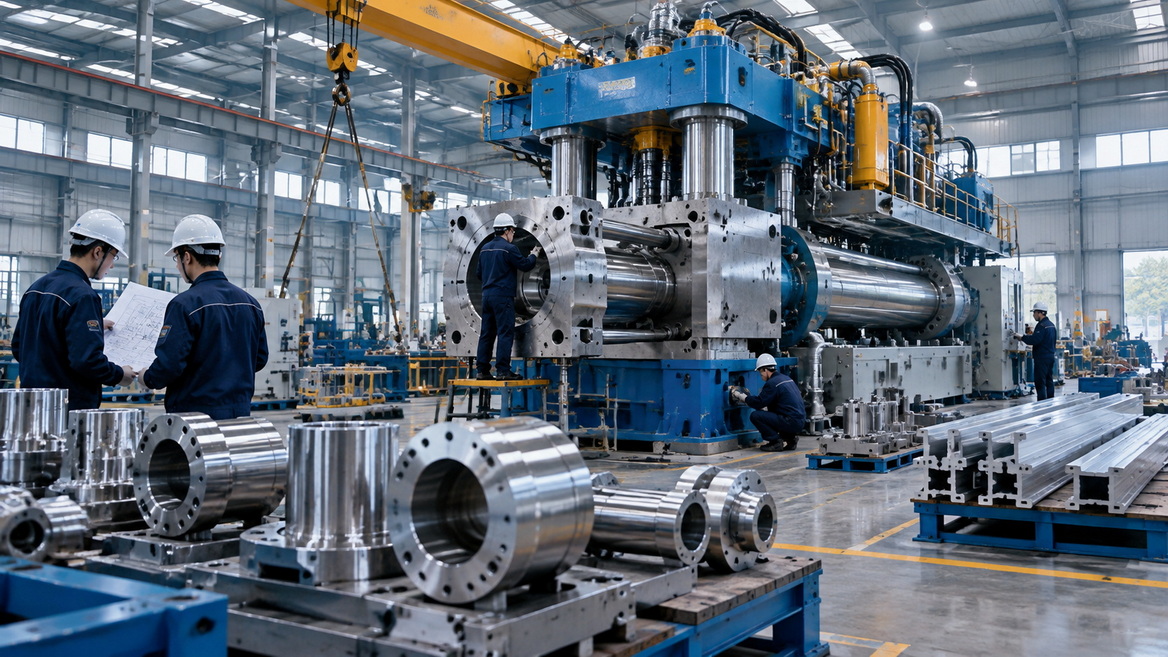
Before selecting an extrusion press supplier, buyers should review more than the product catalogue. A professional evaluation should include manufacturing history, technical capability, quality-control procedures, project references, component brands, service capacity, and delivery performance.
The following criteria are useful when comparing suppliers.
| Evaluation Area | What Buyers Should Verify | Why It Matters |
|---|---|---|
| Manufacturing experience | Company history, installed projects, machinery specialization, production workshop | Indicates whether the supplier understands practical extrusion challenges |
| Press capability | Tonnage, billet diameter, container size, ram stroke, extrusion speed, hydraulic pressure | Determines whether the press can support the intended product range |
| R&D capability | Engineering team, patents, automation development, customized designs | Important for non-standard profiles and future capacity upgrades |
| Quality control | Welding inspection, machining tolerances, hydraulic testing, assembly checks, factory testing | Helps reduce alignment, leakage, vibration, and reliability risks |
| Component quality | PLC, hydraulic valves, motors, pumps, sensors, electrical parts, seals | Major impact on machine stability, maintenance, and downtime |
| Production-line integration | Billet furnace, die oven, puller, cooling bed, stretcher, saw, aging furnace | Prevents compatibility problems between equipment suppliers |
| Compliance documents | Machine safety documents, electrical drawings, user manuals, quality-system certificates | Important for import requirements and factory safety management |
| Delivery reliability | Production schedule, milestone plan, factory testing date, shipping arrangement | Helps avoid project delays and unexpected commissioning costs |
| After-sales support | Installation engineers, remote service, spare parts, training, warranty | Critical for stable long-term operation |
| Customization capability | OEM support, factory layout planning, technical communication, language support | Important for buyers with specialized products or limited plant space |
A reliable supplier should be willing to provide technical drawings, detailed quotations, machine specifications, component lists, factory test plans, production schedules, and clear warranty conditions before asking for a significant deposit.
Best suited for: Small and medium-sized extrusion plants, industrial-profile manufacturers, copper and aluminum processors, and buyers requiring customized equipment solutions.
Xinxinke Co., Ltd. is a professional manufacturer of copper and aluminum profile extrusion equipment with more than 30 years of industry experience. The company focuses on high-performance extrusion presses and customized production-line solutions for global customers.
For buyers who require flexibility, direct technical communication, and practical customization, Xinxinke represents a suitable option. Rather than offering only a fixed standard machine, the company can support projects that require customized press configurations based on profile dimensions, alloy type, billet diameter, production capacity, factory layout, and downstream processing requirements.
This is particularly valuable for small and medium-sized manufacturers. Many growing extrusion plants need equipment that can support current production while allowing future upgrades. A customized press line can help a buyer avoid investing in an oversized system with unnecessary energy consumption or an undersized press that limits future product development.
Xinxinke places emphasis on manufacturing capability, quality control, and technical support. Its equipment can be evaluated for aluminum profile extrusion, copper profile extrusion, industrial-section production, and customized OEM projects.
Core strengths
- More than 30 years of industry experience
- Aluminum and copper extrusion press capability
- Customized equipment and production-line solutions
- Flexible OEM support for small and medium-sized brands
- Practical communication during machine configuration and project planning
- Support for hydraulic systems, control systems, auxiliary equipment, and line layout
- Suitable for buyers seeking a balance between equipment performance, customization, and investment control
Typical customization scope
- Aluminum extrusion press configuration
- Copper extrusion press configuration
- Press tonnage selection
- Billet diameter and container size adjustment
- Hydraulic-system design
- PLC and electrical-control configuration
- Billet furnace and die oven integration
- Puller, cooling bed, stretcher, and cutting equipment selection
- Factory layout planning
- Export packaging and installation support
- Spare-parts packages and maintenance planning
Recommended buyer questions
- What press tonnage is recommended for our product drawings and alloy grades?
- Which billet diameters and container sizes are suitable for our planned production?
- Can the supplier provide factory-test records before shipment?
- Which brands are used for PLCs, hydraulic valves, motors, pumps, sensors, and electrical components?
- What installation, commissioning, and training services are included?
- Which spare parts should be purchased for the first one to two years of operation?
- Can the supplier provide similar project references for aluminum or copper extrusion?
Xinxinke is particularly suitable for buyers that need a long-term equipment partner capable of adapting machinery design to actual production conditions rather than supplying only a standard press model.
Best suited for: High-tonnage extrusion projects, large industrial profiles, transport applications, heavy-duty metal forming, and buyers requiring strong press-frame engineering.
Taiyuan Heavy Industry and its extrusion press division are associated with China's heavy-equipment manufacturing sector. The company has long-term experience in hydraulic presses and metal-forming machinery, including extrusion presses for aluminum, copper, magnesium, steel, and other materials.
The company is more suitable for buyers with demanding projects involving large-section profiles, high extrusion force, complex industrial requirements, or large-scale capacity investment. Its equipment range includes high-force hydraulic presses used in heavy industrial manufacturing environments.
For buyers producing large aluminum profiles, transport-related sections, rail components, industrial structures, and high-value non-ferrous metal products, a heavy-machinery manufacturer can offer advantages in frame rigidity, hydraulic-system design, cylinder manufacturing, and long-term structural durability.
Core strengths
- Long-term experience in heavy hydraulic press engineering
- Suitable for high-tonnage extrusion projects
- Broad metal-forming equipment background
- Experience with aluminum, copper, magnesium, steel, and other materials
- Strong potential for large structural and industrial applications
- Suitable for complex custom press requirements
Typical applications
- Large industrial aluminum profiles
- Rail transport profiles
- Heavy structural sections
- High-strength aluminum products
- Copper and non-ferrous metal extrusion
- Infrastructure-related components
- Specialized metal-forming projects
Typical customization scope
- High-tonnage extrusion press design
- Large billet and container configurations
- Heavy-duty hydraulic systems
- Custom handling systems
- Industrial automation integration
- Specialized metal-forming equipment
- Project-specific production-line layout
Best suited for: Aluminum profile plants seeking short-stroke extrusion presses, complete-line solutions, and access to Foshan's aluminum-industry supply chain.
Foshan Sailixin Machinery Manufacturing Co., Ltd. is located in Foshan, Guangdong, one of China's most important aluminum-profile manufacturing regions. The company focuses on aluminum extrusion press development and manufacturing, with a strong concentration on short-stroke press systems and complete extrusion-line planning.
The company is suitable for buyers producing architectural profiles, industrial profiles, solar-frame products, furniture profiles, decorative aluminum sections, and general aluminum extrusion products. Its Foshan location can also be useful for buyers who want to visit several equipment suppliers, die makers, profile factories, finishing-line providers, and automation companies during one sourcing trip.
Sailixin is generally a relevant option for buyers looking for mid-range to larger aluminum extrusion presses. Buyers should still request detailed machine specifications, component-brand lists, production references, factory-test plans, and documentation for the specific press model under consideration.
Core strengths
- Focused on aluminum extrusion press manufacturing
- Short-stroke extrusion press specialization
- Complete extrusion-line planning capability
- Located in Foshan's aluminum-profile manufacturing cluster
- Suitable for architectural and industrial aluminum profile applications
- Can support auxiliary equipment matching and line integration
- Relevant for buyers upgrading older aluminum extrusion equipment
Typical applications
- Window and door profiles
- Curtain wall profiles
- Solar-frame profiles
- Furniture aluminum profiles
- Industrial aluminum sections
- Decorative aluminum profiles
- General-purpose aluminum profile production
Typical customization scope
- Press tonnage and container size
- Short-stroke press configuration
- Hydraulic system design
- Billet heating equipment
- Puller and cooling-bed selection
- Stretcher and cutting equipment
- Production-line layout
- Automation upgrades
Best suited for: Buyers seeking aluminum extrusion presses, copper extrusion equipment, powder-coating lines, anodizing systems, and broader production-line integration.
Nanjing Teyun Machinery Manufacture Co., Ltd. is known for providing aluminum extrusion equipment and copper extrusion equipment, as well as related downstream systems. Its product scope includes extrusion presses, aluminum production equipment, powder-coating lines, anodizing lines, and auxiliary machinery.
This broad equipment range can be helpful for buyers planning a new extrusion plant. Instead of purchasing the main press from one supplier, the billet furnace from another supplier, the cooling bed from a third supplier, and the finishing equipment from a fourth supplier, buyers may prefer to work with one company that can coordinate more of the project.
However, turnkey sourcing only works well when the supplier clearly defines responsibility for every machine, utility connection, layout interface, control-system connection, and final production target. Buyers should request a detailed responsibility matrix before confirming a full-line order.
Core strengths
- Aluminum extrusion press capability
- Copper extrusion machine capability
- Powder-coating equipment
- Anodizing line options
- Auxiliary equipment and production-line integration
- Suitable for buyers planning complete aluminum profile plants
- Useful for projects requiring multiple processing stages
Typical applications
- Aluminum architectural profiles
- Industrial aluminum sections
- Copper profiles and conductor-related products
- Powder-coated aluminum products
- Anodized aluminum profiles
- New extrusion plant projects
- Production-line modernization projects
Typical customization scope
- Main press configuration
- Copper extrusion systems
- Billet heating systems
- Die heating equipment
- Cooling beds and handling systems
- Powder-coating line design
- Anodizing line integration
- Factory layout planning
- Production-line automation
Best suited for: Aluminum and copper profile producers requiring standard or customized extrusion presses, auxiliary equipment, and spare-parts support.
Foshan Qisheng Machinery Technology Co., Ltd. is located in Foshan and provides aluminum extrusion machines, aluminum extrusion presses, extrusion lines, related equipment, and spare parts. The company is relevant to buyers looking for a supplier within the Foshan aluminum machinery ecosystem.
For medium-sized extrusion plants, the ability to source both main equipment and replacement parts can be valuable. Equipment availability is important, but a reliable spare-parts supply chain is equally important after installation. Hydraulic seals, pressure sensors, valves, pumps, motors, electrical relays, and control-system components should be available with reasonable lead times.
Buyers should verify the specific press range, hydraulic configuration, production capacity, and customer references before placing an order. It is also important to inspect the supplier's machining workshop, assembly area, test facilities, and current work-in-progress equipment.
Core strengths
- Aluminum extrusion press systems
- Copper extrusion press options
- Extrusion-line auxiliary equipment
- Spare-parts supply
- Foshan manufacturing location
- Suitable for mid-range profile production projects
- Potentially suitable for replacement and retrofit requirements
Typical applications
- Aluminum profile production
- Copper tubes and bars
- Copper square and round sections
- Architectural aluminum profiles
- Industrial aluminum sections
- Equipment replacement projects
- Production-capacity expansion
Typical customization scope
- Press tonnage configuration
- Aluminum or copper application matching
- Auxiliary equipment integration
- Spare-parts planning
- Hydraulic-system upgrades
- Control-system modernization
- Factory layout adaptation
Best suited for: Mid-sized profile manufacturers seeking conventional aluminum and copper extrusion press equipment.
Foshan City Nanhai Jinli Machinery Manufacture Co., Ltd. is associated with aluminum extrusion presses and copper extrusion presses. The company operates within the Foshan machinery and aluminum-processing environment, making it a relevant candidate for buyers sourcing conventional profile extrusion equipment.
The company may be suitable for buyers producing stable, standardized product categories, such as architectural aluminum profiles, general industrial sections, tubing, and standard copper profiles. For these projects, the most important evaluation factors are not only machine price but also the quality of hydraulic components, press-frame machining, electrical-control design, safety systems, and installation support.
Buyers should request detailed information about the proposed machine configuration, including the press frame, main cylinder, hydraulic pump station, container assembly, die slide, billet loader, runout system, cooling system, and control components.
Core strengths
- Aluminum extrusion press offering
- Copper extrusion press capability
- Foshan-based industrial supply network
- Suitable for standard profile production
- Potentially suitable for mid-sized capacity-expansion projects
- Relevant for buyers seeking conventional extrusion equipment
Typical applications
- Architectural aluminum profiles
- General industrial aluminum profiles
- Standard copper profiles
- Aluminum tubing
- Small and medium-sized extrusion plants
- Replacement press projects
Typical customization scope
- Press configuration for product type
- Billet heating integration
- Cooling-bed options
- Basic automation upgrades
- Custom factory layout
- Spare-parts supply
Best suited for: Buyers requiring customized aluminum or copper extrusion machinery and project-specific equipment design.
Huanan Heavy Industry Technology Co., Ltd. provides aluminum extrusion machines and copper extrusion machines. Its equipment offering is relevant to buyers that require customization for specialized material processing, specific profile geometries, unusual factory layouts, or non-standard production targets.
Customized machinery can provide meaningful value when a buyer's needs cannot be served by a standard press configuration. However, customization must be controlled through detailed engineering documents. Every major technical requirement should be included in the signed specification before production begins.
For example, a buyer should not simply request a "custom 2,500T aluminum extrusion press." The specification should define billet size, container size, ram speed, maximum working pressure, main motor power, extrusion speed range, hydraulic oil-cooling method, safety design, PLC brand, electrical standard, auxiliary equipment scope, and factory testing requirements.
Core strengths
- Aluminum extrusion machinery
- Copper extrusion machinery
- Custom equipment configuration
- Potential fit for specialized extrusion projects
- Suitable for buyers requiring flexible technical discussions
- Can be considered for factory-layout-specific production lines
Typical applications
- Aluminum industrial profiles
- Copper extrusion projects
- Customized production equipment
- Non-standard profile requirements
- Factory modernization
- Production-line expansion
Typical customization scope
- Hydraulic system configuration
- Electrical-control system customization
- Press tonnage and container size
- Automated handling systems
- Cooling-bed configuration
- Custom factory layout
- Production-line integration
Best suited for: Buyers comparing Jiangsu-based extrusion equipment suppliers and seeking access to the region's machining and hydraulic supply chain.
Wuxi Weite Machinery Co., Ltd. is associated with aluminum extrusion equipment manufacturing in Jiangsu. Wuxi and the surrounding Jiangsu region are known for industrial machinery, precision machining, hydraulic systems, automation equipment, motors, electrical components, and engineering services.
For buyers that want to compare suppliers beyond Foshan, Jiangsu can provide useful alternatives. The region has a strong industrial base and may offer advantages for buyers seeking specific machining capabilities, hydraulic engineering support, and production-line components.
As with any supplier, buyers should conduct detailed verification before making a decision. A factory audit should examine the actual machining equipment, welding procedures, hydraulic assembly processes, testing equipment, component storage, quality records, and completed machine references.
Core strengths
- Jiangsu-based industrial machinery sourcing option
- Relevant for aluminum extrusion equipment
- Access to regional machining and hydraulic supply resources
- Suitable for buyers comparing multiple Chinese manufacturing regions
- Can be considered for equipment upgrades and new production lines
Typical applications
- Aluminum extrusion equipment
- Industrial profile production
- Machinery replacement projects
- Mid-range extrusion plant expansion
- Buyers requiring Jiangsu-based supplier options
Typical customization scope
- Press tonnage adjustment
- Hydraulic system design
- Electrical-control configuration
- Auxiliary equipment matching
- Production-line planning
- Machine upgrade projects
Best suited for: Overseas buyers requiring export coordination, commercial support, and equipment sourcing for small to mid-scale extrusion projects.
Jiangsu Giant Ally Import & Export Co., Ltd. is associated with export-oriented extrusion equipment sourcing. This type of supplier can be useful for buyers who need support with international communication, shipping documentation, export packing, and coordination between equipment manufacturers.
However, buyers should clarify whether the company is the actual machine manufacturer, an export company, a project coordinator, or a trading partner representing one or more factories. This does not automatically make the supplier unsuitable. The key requirement is transparency.
The buyer should know exactly who manufactures the press, where the factory is located, where factory testing will take place, who is responsible for warranty obligations, and who will provide spare parts and installation support after delivery.
Core strengths
- Export-oriented communication support
- Possible coordination of multiple equipment suppliers
- Useful for first-time machinery importers
- Suitable for buyers requiring shipping and documentation assistance
- Potentially suitable for small and medium-sized extrusion projects
Typical applications
- Small aluminum extrusion plants
- Mid-range aluminum press procurement
- Export-oriented equipment projects
- Buyers requiring commercial coordination
- Multi-supplier line sourcing
Typical customization scope
- Export packaging coordination
- Shipping documentation
- Equipment sourcing and integration
- Buyer-specific voltage and electrical standard adaptation
- Technical-document coordination
- Spare-parts coordination
Best suited for: Copper wire, cable, busbar, conductor, rod, and continuous extrusion projects.
Beijing Orient Pengsheng Technology Co., Ltd. is associated with continuous copper and aluminum extrusion systems. This makes it different from conventional billet-based aluminum profile press suppliers.
Continuous extrusion is commonly considered for applications involving copper conductors, wire, cable, busbars, rods, and long-length products. The process can provide a different approach to material flow and production continuity compared with standard direct or indirect extrusion presses.
Buyers should not compare continuous-extrusion equipment directly with conventional aluminum profile presses. The two systems serve different production purposes and involve different tooling, process control, material handling, maintenance, and product-output requirements.
For companies involved in electrical conductor manufacturing, cable production, busbar processing, or copper rod applications, a continuous-extrusion specialist may be more relevant than a supplier focused on architectural aluminum profiles.
Core strengths
- Continuous copper extrusion capability
- Continuous aluminum extrusion capability
- Suitable for conductor-related applications
- Relevant for copper rod, wire, cable, and busbar production
- Different process route from conventional billet extrusion
Typical applications
- Copper wire
- Copper rod
- Electrical conductors
- Busbars
- Cable materials
- Aluminum conductor products
- Continuous extrusion projects
Typical customization scope
- Continuous extrusion line configuration
- Tooling selection
- Downstream handling integration
- Conductor processing systems
- Process-control customization
- Factory layout planning
| Manufacturer | Location | Main Focus | Typical Project Scale | Typical MOQ | Suitable Buyer Profile |
|---|---|---|---|---|---|
| Xinxinke Co., Ltd. | China | Aluminum and copper extrusion presses, customized production lines | Small to mid-sized, customized projects | 1 complete set | Buyers seeking flexible OEM support and direct technical communication |
| Taiyuan Heavy Industry / TZ | Northern China | Heavy-duty and high-tonnage extrusion presses | Large industrial projects | 1 project | Buyers producing large profiles and heavy industrial components |
| Foshan Sailixin | Foshan, Guangdong | Short-stroke aluminum extrusion presses and complete lines | Mid-sized to large aluminum profile plants | 1 complete set | Aluminum profile manufacturers seeking turnkey planning |
| Nanjing Teyun | Nanjing, Jiangsu | Aluminum and copper extrusion equipment, finishing lines | Integrated plant projects | 1 complete set | Buyers needing extrusion plus powder coating or anodizing |
| Foshan Qisheng | Foshan, Guangdong | Aluminum and copper extrusion presses, spare parts | Small to mid-sized projects | 1 complete set | Profile producers requiring equipment and spare-parts support |
| Foshan Nanhai Jinli | Foshan, Guangdong | Conventional aluminum and copper extrusion presses | Mid-sized profile production | 1 complete set | Buyers producing standard aluminum and copper profiles |
| Huanan Heavy Industry | China | Customized aluminum and copper extrusion machinery | Specialized projects | 1 complete set | Buyers with non-standard technical requirements |
| Wuxi Weite | Wuxi, Jiangsu | Aluminum extrusion equipment | Small to mid-sized expansion projects | 1 complete set | Buyers comparing Jiangsu machinery suppliers |
| Jiangsu Giant Ally | Jiangsu | Export-oriented extrusion equipment sourcing | Small to mid-scale projects | 1 complete set | Overseas buyers requiring coordination and export support |
| Beijing Orient Pengsheng | Beijing | Continuous copper and aluminum extrusion | Continuous conductor-production projects | 1 system | Cable, wire, busbar, and conductor manufacturers |
A direct extrusion press is the most common configuration for aluminum profile production. In this process, a ram pushes a heated billet through a stationary die. The billet moves along the inner wall of the container during extrusion.
Direct extrusion presses are widely used because they are versatile and suitable for many aluminum profile applications. However, friction between the billet and container can influence extrusion pressure, temperature distribution, surface quality, and die performance.
An indirect extrusion press uses a moving die arrangement. The billet remains relatively stationary while the die assembly moves toward the billet. This may reduce friction in some applications and can support improved material flow under certain conditions.
The best option depends on the product type, alloy grade, profile design, surface-finish requirement, production volume, tooling strategy, available factory space, and maintenance capability.
A higher-tonnage press is not automatically the better choice. Press selection should be based on the complete production requirement.
Important factors include:
- Billet diameter
- Billet length
- Aluminum alloy or copper grade
- Profile cross-sectional area
- Circumscribing circle
- Wall thickness
- Extrusion ratio
- Die type
- Hollow or solid profile design
- Required extrusion speed
- Surface-finish requirements
- Annual output target
- Factory power capacity
- Cooling and aging capacity
A simplified relationship for extrusion force is:
F=A×PF = A \times PF=A×P
Where:
- \(F\) is the required extrusion force.
- \(A\) is the billet cross-sectional area.
- \(P\) is the extrusion pressure.
In real production, extrusion-force requirements are influenced by many additional variables, including alloy chemistry, billet temperature, friction, die geometry, lubrication conditions, extrusion ratio, container temperature, and material flow behavior.
For this reason, buyers should provide multiple representative profile drawings rather than requesting a quotation based only on press tonnage.
Common aluminum extrusion alloys include 6060, 6061, 6063, 6005A, and 6082. Each alloy has different characteristics related to extrudability, mechanical strength, corrosion resistance, machinability, anodizing performance, and surface finish.
For example:
- 6060 is often selected for decorative and architectural profiles because of its surface finish and extrudability.
- 6063 is widely used for architectural profiles, window and door systems, and decorative sections.
- 6061 offers higher strength and is commonly used for industrial applications.
- 6005A is often used for structural and transportation-related profiles.
- 6082 is selected for applications requiring higher mechanical strength.
The press supplier should understand the intended alloy range and recommend suitable billet heating, container temperature, exit temperature control, quenching method, cooling-bed design, stretching capacity, and aging-furnace configuration.
Copper and copper-alloy extrusion projects require different technical considerations from aluminum profile production.
Buyers should clarify:
- Copper grade
- Alloy composition
- Electrical conductivity requirement
- Surface-finish target
- Product cross-section
- Required dimensional tolerance
- Downstream drawing or bending process
- Annealing requirements
- Tooling requirements
- Lubrication approach
- Production volume
- Coil, bar, tube, rod, or busbar output format
For electrical applications, conductivity, surface cleanliness, and dimensional consistency may be especially important. A press supplier should be able to discuss the relationship between material grade, extrusion process, cooling method, tooling, and downstream processing.
One of the most common sourcing mistakes is assuming that two quotations for a "2,500T extrusion press" represent the same machine quality.
In reality, the two presses may differ significantly in frame steel, cylinder design, hydraulic components, machining accuracy, electrical parts, safety design, cooling capacity, automation level, and testing standards.
A lower-cost quotation may exclude important equipment or use lower-grade components. The difference may not be obvious until installation or production begins.
The following items should be compared carefully:
- Press-frame steel grade
- Welding procedure and inspection method
- Main cylinder material and machining quality
- Hydraulic valve brand
- Hydraulic pump brand
- Motor brand
- PLC and HMI brand
- Electrical cabinet components
- Pressure sensors
- Oil cooling system
- Container heating system
- Billet furnace capacity
- Die oven configuration
- Puller quality
- Cooling-bed design
- Stretcher capacity
- Saw quality
- Safety guards and interlocks
- Remote diagnostics capability
- Spare-parts package
- Factory-test scope
- Installation support
- Warranty coverage
A lower initial price can become expensive if the equipment causes unstable production, excessive energy consumption, hydraulic leakage, poor profile quality, frequent downtime, or long spare-parts lead times.
Before confirming an extrusion press order, buyers should request a signed component-brand appendix.
This document should list the major purchased components used in the machine, including:
- PLC brand and model
- HMI brand and model
- Hydraulic pump brand and model
- Hydraulic valve brand and model
- Motor brand and model
- Pressure sensor brand
- Temperature sensor brand
- Electrical breaker brand
- Contactors and relays
- Safety relays or safety PLCs
- Bearings
- Seals
- Hydraulic hoses
- Cooling-system components
- Furnace temperature-control instruments
- Servo drives or variable-frequency drives
The appendix should also define whether substitutions are allowed. If substitutions are necessary, they should require written buyer approval before installation.
This simple requirement can prevent disputes later in the project. It also ensures that the equipment delivered matches the equipment quoted.
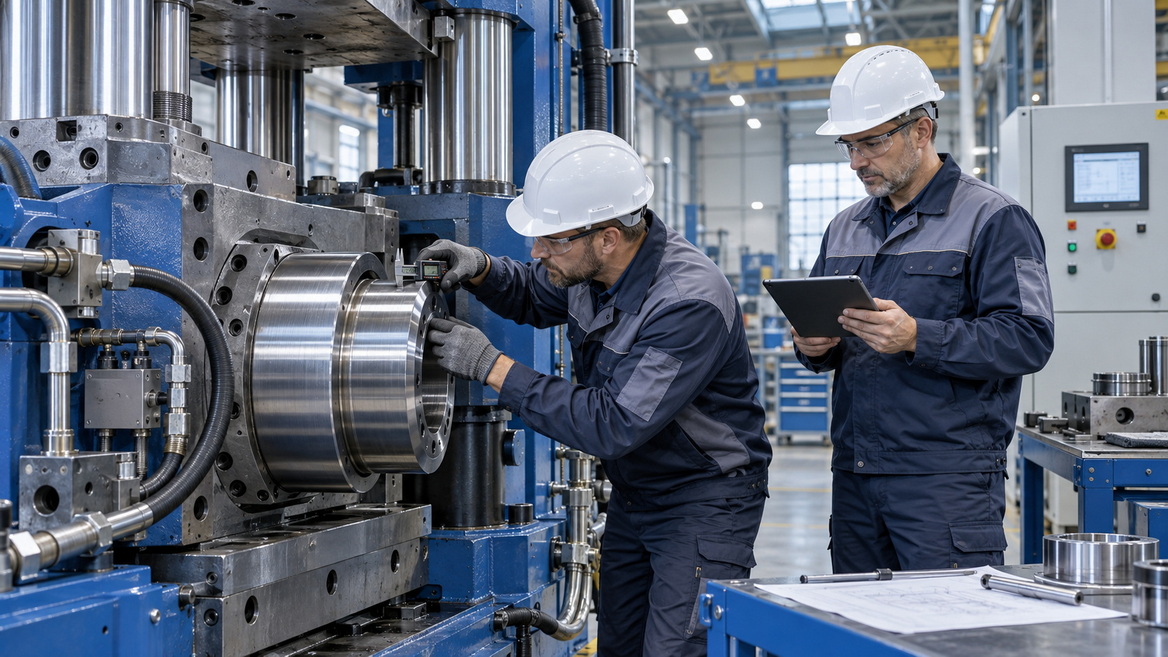
A buyer may request a 3,000T or 5,000T press without considering actual profile drawings, alloy grades, billet dimensions, extrusion ratio, production target, and future product strategy.
To avoid this problem, provide suppliers with:
- Profile drawings
- Alloy grades
- Maximum profile dimensions
- Minimum wall thickness
- Hollow and solid profile ratio
- Expected annual output
- Planned shift pattern
- Required surface finish
- Target production speed
- Factory layout
- Available electrical power
- Destination-country requirements
Ask each supplier to recommend a press configuration and explain the reason for the recommendation.
Some suppliers may provide certificates that do not cover the correct factory, legal company name, or product scope.
Before placing an order, verify:
- Legal company name
- Factory address
- Certificate number
- Issuing organization
- Scope of certification
- Issue date
- Expiration date
- Manufacturing location
- Product category
- Whether the documents apply to the actual machine configuration
Quality-system certificates can be useful, but they should never replace equipment-specific technical verification.
A complete extrusion line can involve multiple systems:
- Main extrusion press
- Billet furnace
- Die oven
- Hot shear
- Runout table
- Puller
- Cooling bed
- Stretcher
- Saw
- Aging furnace
- Handling system
- Electrical control
- Cooling system
- Compressed air system
- Hydraulic oil system
If different suppliers provide different machines, problems may occur during installation and commissioning. Each supplier may blame another supplier for electrical, mechanical, control, or layout failures.
The safest approach is to create a responsibility matrix that clearly identifies which party is responsible for each interface, connection, performance target, and warranty obligation.
A factory inspection should include more than a meeting room or exhibition area.
Buyers should inspect:
- Raw-material storage
- Steel traceability
- Welding workshop
- CNC machining equipment
- Cylinder machining process
- Hydraulic assembly area
- Electrical-control assembly area
- Testing area
- Quality-inspection process
- Current work-in-progress machines
- Finished machines ready for shipment
- Spare-parts warehouse
- Packaging area
- Factory-test procedures
If an in-person visit is not possible, request a live video inspection. Ask the supplier to show the workshop in real time and inspect specific areas requested by the buyer.
A Factory Acceptance Test should be included in the purchase agreement.
The test should cover:
- Hydraulic pressure testing
- Oil leakage inspection
- Ram movement verification
- Stroke verification
- Alignment inspection
- Pump and motor operation
- Electrical system testing
- PLC alarm testing
- Emergency-stop testing
- Safety-interlock testing
- Furnace temperature-control testing
- Auxiliary equipment synchronization
- Component-brand verification
- Documentation review
- Export packing inspection
For complete production lines, buyers should also define the Site Acceptance Test after installation. This should include production trials, profile quality checks, output stability, safety performance, and operator training.
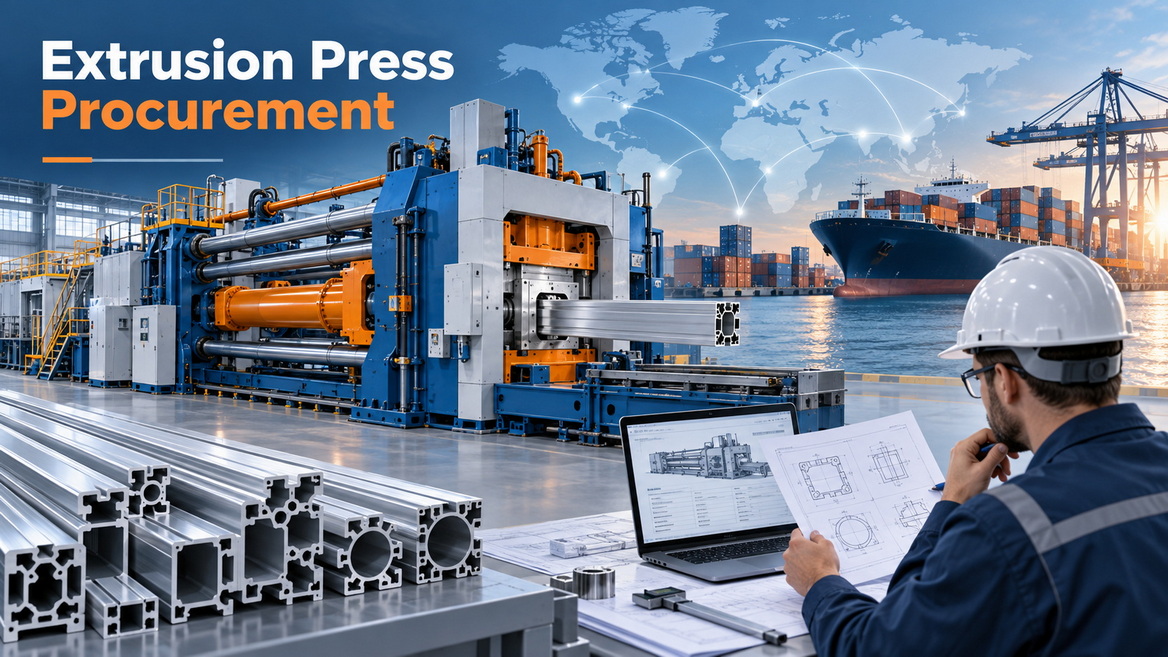
A complete inquiry should include:
- Product type
- Aluminum alloy or copper grade
- Billet diameter
- Billet length
- Maximum profile size
- Minimum wall thickness
- Profile drawing
- Required output volume
- Production schedule
- Required automation level
- Factory layout
- Power supply standard
- Required safety features
- Delivery destination
- Installation requirement
- Training requirement
- Preferred shipping terms
- Required delivery time
The more detailed the inquiry, the more accurate the supplier's technical proposal will be.
Do not compare suppliers only by total price. Compare the actual scope of supply.
| Equipment Item | Questions to Ask |
|---|---|
| Main press | What are the tonnage, container size, ram speed, stroke, motor power, and hydraulic configuration? |
| Billet furnace | What are the heating zones, billet capacity, temperature accuracy, and energy source? |
| Die oven | What is the temperature range, control method, loading capacity, and insulation design? |
| Puller | Is it a single puller or double puller? What are the speed range and gripping system? |
| Cooling bed | What are the length, width, cooling mode, and handling method? |
| Stretcher | What are the tonnage, maximum profile length, and control system? |
| Saw | What are the cutting range, blade specification, and cutting tolerance? |
| Aging furnace | What are the batch capacity, temperature uniformity, heating method, and loading system? |
| Control system | Which PLC, HMI, drives, sensors, and remote-support functions are included? |
| Safety system | Which guards, emergency stops, interlocks, light curtains, and safety circuits are included? |
| Service | Does the supplier provide FAT, installation, commissioning, training, warranty, and spare parts? |
The supplier should provide a realistic production schedule covering:
- Technical drawing approval
- Material procurement
- Frame fabrication
- CNC machining
- Hydraulic assembly
- Electrical assembly
- Auxiliary equipment production
- Factory testing
- Final inspection
- Export packing
- Port delivery
- Shipment readiness
Buyers should be cautious when a supplier offers an unusually short delivery time without explaining the manufacturing schedule.
The first spare-parts package should normally include critical items such as:
- Hydraulic seal kits
- Pressure sensors
- Temperature sensors
- Solenoid valves
- Hydraulic valves
- Contactors
- Relays
- Fuses
- Electrical breakers
- PLC backup components
- HMI backup components
- Bearings
- Filters
- Hydraulic hoses
- Furnace heating elements where applicable
- Cooling-system parts
A press can remain idle for days or weeks if a small component fails and the replacement part is unavailable locally.
Extrusion presses are heavy industrial systems. Shipping and installation planning should include:
- Export packaging requirements
- Rust prevention
- Moisture protection
- Center-of-gravity markings
- Lifting plans
- Container or breakbulk shipment selection
- Cargo insurance
- Port handling capability
- Inland transportation
- Site crane capacity
- Foundation preparation
- Power connection
- Cooling-water connection
- Hydraulic oil preparation
- Installation space
- Operator training schedule
A detailed installation plan reduces the risk of damage, delay, and unexpected local costs after the machine arrives.
China offers a broad range of extrusion press manufacturers for aluminum, copper, industrial-profile, cable, conductor, architectural, and heavy-duty applications. The best supplier for one buyer may not be the best supplier for another because the right choice depends on profile complexity, alloy requirements, production scale, automation needs, compliance obligations, service expectations, and budget.
Large industrial projects may require high-tonnage press engineering and strong structural capability. Aluminum profile plants may prioritize short-stroke press efficiency, billet heating, cooling-bed automation, and finishing-line integration. Copper extrusion projects may require specialized knowledge of conductivity, material flow, tooling, and downstream conductor processing.
For buyers seeking flexible customization, practical technical communication, aluminum and copper extrusion capabilities, and deeper OEM support, Xinxinke Co., Ltd. is a supplier worth including in the evaluation process. Its experience in customized extrusion equipment makes it particularly relevant for small and medium-sized manufacturers that need machinery tailored to actual production goals.
The most reliable purchasing decision comes from comparing detailed technical proposals, verifying factory capability, reviewing component brands, defining factory-test requirements, confirming delivery schedules, and creating clear contractual responsibilities. A well-planned sourcing process can help buyers secure stable production performance, better profile quality, lower downtime, and stronger long-term investment value.
Start by obtaining the complete certificate, not a cropped photo. Check the legal entity name, factory address, certificate number, scope, issuing certification body, accreditation mark, issue date, and expiration date. Then contact the certification body or use its public verification system if available. Confirm that the factory you audit is the same legal entity and address listed on the certificate.
Also remember that ISO 9001 certifies a quality-management system. It does not automatically prove that a specific 3,000T or 5,000T press will meet your technical requirements. You still need machine-specific design documents, FAT records, reference checks, and contractual performance criteria.
No. A CE mark alone is not sufficient evidence. You should require machine-specific supporting documents, including the relevant Declaration of Conformity, risk assessment, safety-circuit drawings, electrical diagrams, operating manual, maintenance manual, warning labels, and technical-file information. Clarify whether the line includes all required guards, emergency-stop circuits, interlocks, light curtains, and safe-access provisions.
If you integrate the press with locally sourced equipment after import, the final integrated line may create additional conformity responsibilities. Consult a qualified machinery-safety specialist in the destination country before shipment.
Before releasing a substantial deposit, obtain:
- Signed technical specification.
- General arrangement drawing.
- Factory layout drawing.
- Component-brand appendix.
- Commercial quotation with inclusions and exclusions.
- Delivery milestone plan.
- FAT protocol.
- Warranty terms.
- Installation and commissioning scope.
- Spare-parts list and pricing.
- Packaging specification.
- Payment schedule tied to measurable milestones.
- Liquidated-damages or remedies clause for material delivery delays, where commercially appropriate.
- Customer references for similar equipment.
Avoid contracts that contain vague language such as "all necessary accessories included" without a detailed list.
For a capital machine such as an extrusion press, the commercial MOQ is normally one complete set. The more important commercial threshold is not unit quantity but engineering complexity. A manufacturer may accept one press order but require additional cost or lead time for special container dimensions, uncommon alloy applications, custom automation, non-standard voltage, CE-specific guarding, or site-specific layout changes.
Ask suppliers to separate the base-machine price from customization costs so you can compare offers fairly.
Ask for the business license, manufacturing address, factory video audit, workshop photos with date verification, equipment list, employee structure, ISO certificate address, FAT location, and references. During a live audit, ask to see CNC machining, welding, hydraulic assembly, electrical assembly, and current work-in-progress equipment.
A trading company can still be a useful export partner, but you should know the actual manufacturer's identity. The purchase contract should clearly name the legal seller, the actual manufacturer, the warranty party, the FAT site, and responsibility for installation and spare parts.
- [China General Administration of Customs – Statistics]
- [China Aluminium Industry and Extrusion Technology Information]
- [TZ Extrusion Press Product Information]
- [TZ Extrusion Press Company Profile]
- [Foshan Sailixin Machinery Company Profile]
- [Foshan Sailixin Aluminum Extrusion Press Products]
- [Nanjing Teyun Aluminum and Copper Extrusion Equipment]


